

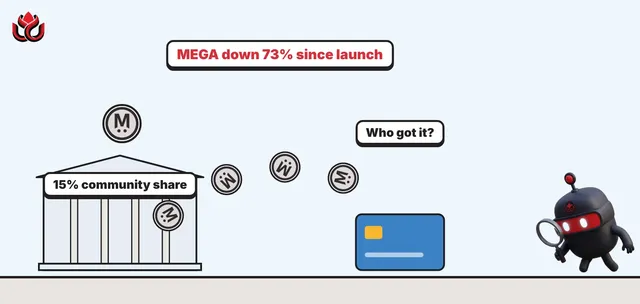
MegaETH's MEGA is down 73% since launch. Who really got the 15% 'community' share?
MegaETH launched MEGA on April 30, 2026, after hitting the first of four network milestones. At least a third of its 15% community allocation was sold at auction, MegaETH has not said how much was given away free, and 53% of supply still waits on future milestones.

FDV vs market cap: how to read a token's supply, with HYPE's 4x gap as a guide
Market cap is price times the tokens circulating today. Fully diluted valuation (FDV) is price times the whole supply, including locked tokens. The gap between them shows how much supply is still to come.

Token unlocks explained: cliffs, vesting and why unlocked does not mean sold
A token unlock is when tokens locked at launch, usually for the team, investors or a treasury, become free to move. Unlocks add to circulating supply and dilute holders, but an unlocked token is not a sold one: Hyperliquid insiders claimed far less HYPE than they could.
Binance Launchpool and HODLer Airdrops explained: how BNB holders earn new tokens
Launchpool pays a new token hour by hour to people who lock BNB or stablecoins; HODLer Airdrops pay one after the fact to people who held BNB in Simple Earn during a past window. Both depend on your share of a pool, and both carry price risk.
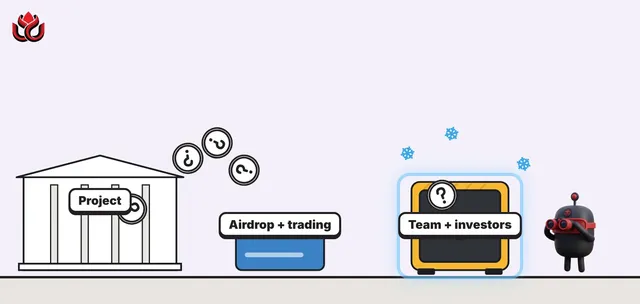
What is a TGE? Token launch day explained, and why most supply stays locked
A TGE, or token generation event, is the moment a crypto project creates its token and the first slice starts to circulate. Airdrop claims and trading usually begin then, while team and investor tokens stay locked for months or years.
What are points programs in crypto? How they work and why points are not tokens
A points program scores what users do on a crypto product, such as deposits, trades or referrals, and usually hints that points will later become tokens. Points are not tokens: the project decides if, when and how they convert.
How crypto airdrops work, and how to spot the scams that copy them
An airdrop is a free drop of tokens to wallets, usually as a reward for early users. Real airdrops never ask for your seed phrase. Most scams instead trick you into signing a transaction on a fake claim site.
Ethos promised WHUF buyers 85% back. It has paid $1.6 million as the token halved
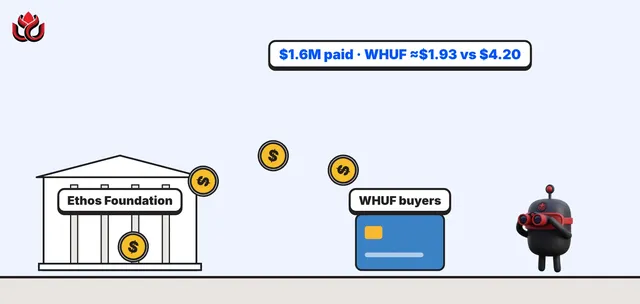
The reputation protocol on Base sold 20% of its token at $4.20 and guaranteed qualifying buyers $3.57. WHUF unlocked on October 8 and fell to about $1.93, so buyers are cashing in the floor while the Ethos Foundation burns the returned tokens.
Jumper's JUMP sale drew $48.6 million for $3 million of tokens. Who got in?
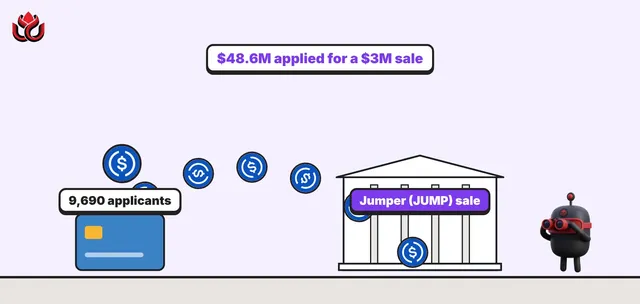
The cross-chain swap app incubated by LI.FI offered 4% of its JUMP supply on Legion and got 24 times its $2 million target. Most of the 9,690 applicants will get their money back, and there is still no date for the token to trade.