Fed's Waller set a 0.3% test for a half-point hike. October's core CPI hit it
Fed Governor Christopher Waller said a 25 basis point hike in December could hurt the Fed's credibility if core inflation stayed near 0.3%. Hours later, October's core reading came in at 0.3%.
Key points
- In a London speech on November 10, 2026, Waller said more tightening will be needed soon. He leaned toward a 25 basis point hike in December.
- He said a 50 basis point hike should be considered if October core CPI rose about 0.3% or more. Only 25 "would put our credibility at risk," he said.
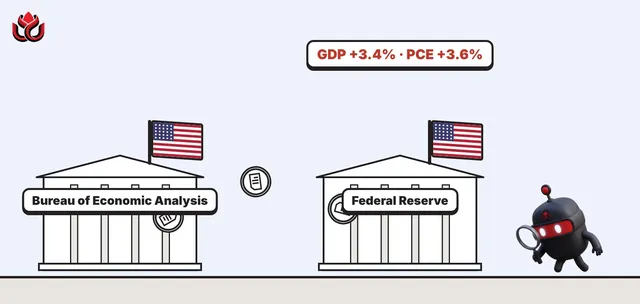
- The Bureau of Labor Statistics' October report showed core CPI up 0.3% for a third month. September PCE inflation was 3.7% over a year, 3.1% for core.
What Waller said
Christopher Waller, a member of the Federal Reserve Board, spoke at the Bank of England Watchers Conference at King's Business School in London on Tuesday, November 10. His speech was blunt about prices. He called September's inflation data bad.
He backed holding rates at the October meeting, because markets had already priced in some of the tightening the Fed had signaled. Now he wants more. He said he leans toward a 25 basis point hike in December (a basis point is 0.01 percentage point), even if monthly inflation improves in October as he expects.
Then he set a test. If October core CPI, which leaves out food and energy, rose about 0.3% or more, like the two months before, a 50 basis point hike should be on the table. In his words, "Hiking only 25 basis points would put our credibility at risk."
The test was met
The Bureau of Labor Statistics reported the same day that core CPI rose 0.3% in October, the same as in August and September. Headline CPI rose 0.4%. Our November 11 CPI story has the details. By Waller's own yardstick, a half-point move is now in play for at least one Fed governor.

The numbers behind his worry
Waller pointed to September's personal consumption expenditures (PCE) index, the Fed's preferred inflation gauge. Headline PCE rose 0.5% in the month and 3.7% over a year. Core PCE rose 0.3% and 3.1%. He flagged rising prices for core goods and services, tech prices tied to the AI buildout, and energy price pressures that he said could last well into 2027 if oil stays high.
Jobs are not forcing his hand the other way. Unemployment was 4.1% in October, and payrolls rose 165,000, he said, in a market where firms neither hire nor fire much. Real GDP grew 3.4% in the third quarter, by the initial estimate, and he expects growth to slow somewhat in the fourth.
The six- and 12-month averages for hiring are close to 80,000 jobs a month, he said, and the prior two months were revised up by a combined 85,000. Much of the speech was about weak labor market dynamism: fewer job changes and a harder road back to work for young and long-term unemployed people. He did not treat that as a reason to wait on rates.
September PCE inflation cited by Waller
%
Source: Waller speech, November 10, 2026.
Why crypto traders care
Higher rates raise the return on cash and bonds, which compete with assets that pay no interest, such as bitcoin. A half-point hike would be twice the size of the Fed's last move, a quarter point on September 16 to a range of 3.75% to 4%. Waller is one vote of 12, and he spoke for himself, not the committee.
LC Insight analysis
This section is our reading of the facts above, not a statement of fact.
- We think Waller drew a clear line on purpose, and the data stepped over it the same day. That makes a 50 basis point hike a live option in December, not a tail risk, at least in his view.
- The likely next signal comes from other Fed officials. If more of them repeat his 0.3% test, markets will treat a half-point move as the base case.
What's next
- Speeches by other Fed officials before the December meeting
- November CPI, the last inflation report before the decision
- October PCE data
Disclaimer. This article is based on public information and the sources listed below as of the update time shown. It is for information only and is not investment, legal or tax advice. Figures may change as companies and authorities publish new data.