Stellar votes on Bell November 3: wallets must learn a new "W" address
Stellar's Protocol 30 upgrade, Bell, faces a testnet validator vote on November 3 and a mainnet vote on November 23, 2026. It adds a new "W" address, post-quantum signature checks for smart contracts and millisecond ledger timing, and Stellar says apps must update their SDKs.
Key points
- Stellar validators vote on Protocol 30 (Bell) for testnet on November 3, 2026, at 12:00 p.m. ET, and for mainnet on November 23, 2026, at 12:00 p.m. ET.
- Bell has three changes: contract addresses that carry a customer ID (CAP-84), ML-DSA post-quantum signature checks inside smart contracts (CAP-87) and ledger close times in milliseconds (CAP-88).
- Stellar says the SDK upgrade is not optional this cycle: apps and exchanges must handle a new address format starting with "W".
 What DeepSea's data shows
Derivatives traders are not making big bets on the vote. DeepSea's long/short page showed only $1.73 million of XLM longs against $908,400 of shorts among the traders it follows on November 2.
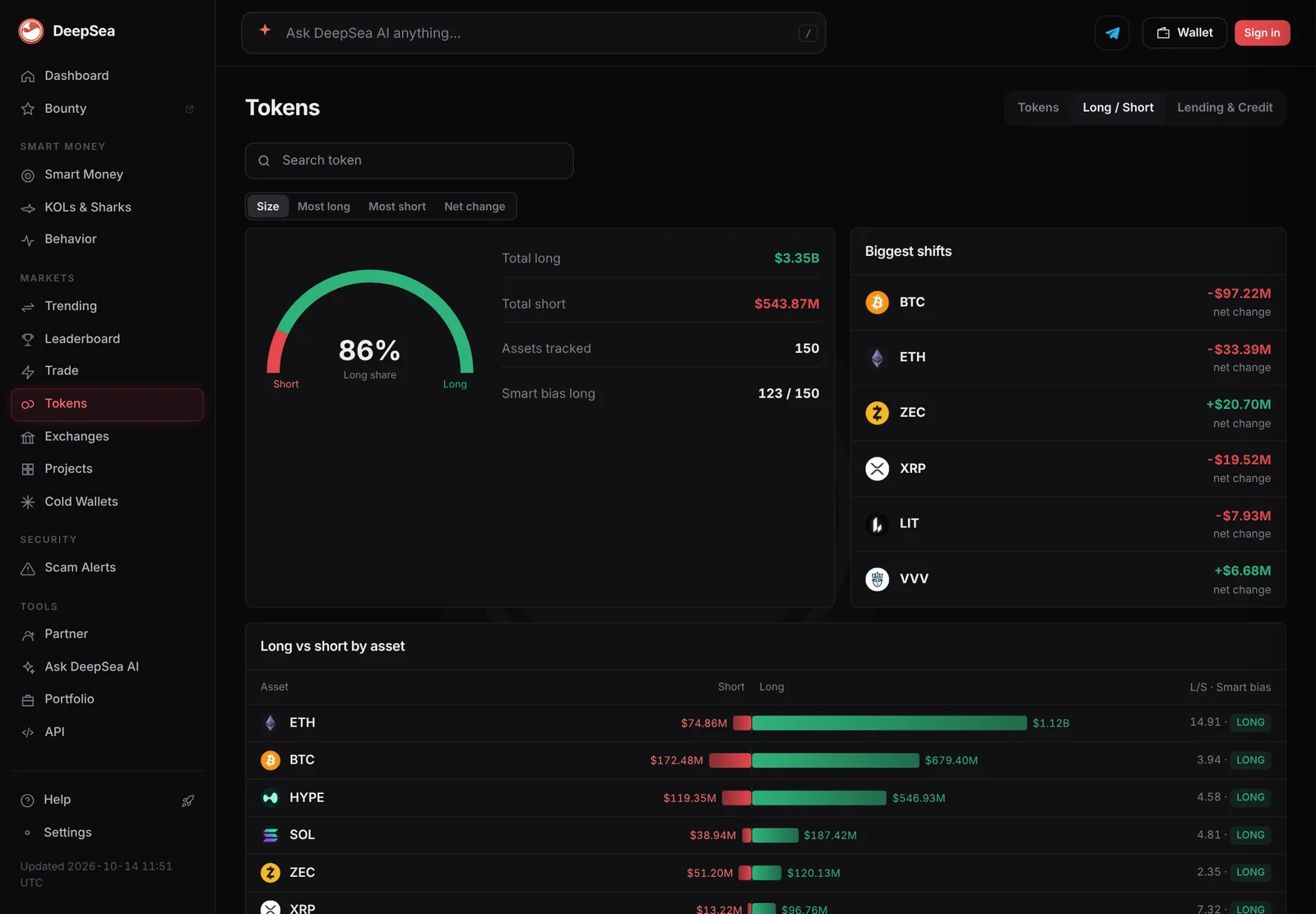
Data: DeepSea (desea.io), checked November 2, 2026, 7:55 a.m. ET.
What validators are voting on
Stellar, the payments-focused blockchain, upgrades through votes by its validators (the computers that agree on each new ledger). The Stellar Development Foundation's Bell upgrade guide, first published October 20 and updated October 23, 2026, sets the testnet vote for November 3 at 12:00 p.m. ET and the mainnet vote for November 23 at 12:00 p.m. ET.
The software is already out. Stellar Core v30.0.0, the node software, had its stable release on October 16, and other infrastructure and SDK releases followed through October 23. Validators must run Core v30.0.0, and the foundation says the command to arm the mainnet vote will go out through validator channels beforehand. The foundation notes all dates can change.
Timeline
Stellar Core v30.0.0 stable release.
Stable releases of Horizon, RPC, Galexie and the main SDKs.
Stellar publishes the Bell (Protocol 30) upgrade guide; updated October 23.
Testnet upgrade vote.
Mainnet upgrade vote.
The three changes in Bell
One contract, many customers (CAP-84). Today a business that wants to tell customers' deposits apart on a smart contract often needs one contract per customer. Bell adds "muxed" contract addresses: a contract address plus a 64-bit ID, written in a new format that starts with "W". The ID is recorded in the transfer event, so one contract can serve many customers. Explaining the old approach, the foundation wrote: "That works for ten customers. It doesn't work for a million."
Post-quantum signature checks (CAP-87). Smart contracts gain the ability to verify ML-DSA signatures, a post-quantum scheme standardized by NIST, the US standards agency. Post-quantum means designed to resist attacks from future quantum computers. Bell adds three host functions, one for each ML-DSA security level (44, 65 and 87), following the FIPS 204 standard. The check runs inside Stellar Core rather than in contract code, which keeps it cheaper for contracts such as custom smart accounts. This covers authorization inside smart contracts only. Normal network transaction signatures stay on Ed25519, and the foundation says a native post-quantum signer for classic accounts is planned for a later upgrade.
Millisecond ledger timing (CAP-88). Ledgers will record close times to the millisecond instead of the second. The foundation calls this the protocol-level prerequisite for faster ledgers. The old closeTime field still reports whole seconds, but the ledger header format changes, so anything that decodes raw ledger data must update its definitions.
Who has to do what, and by when
For ordinary transactions, the foundation expects no incompatibility; it calls the changes additive. The work falls on developers and businesses. The guide is blunt: "The SDK upgrade is not optional this cycle."
- Apps and wallets that check, show or store addresses must accept the new W format. Because the ledger header changes, the guide warns that an older SDK may fail to decode Protocol 30 ledgers. Testnet integrations should upgrade before November 3 and mainnet ones before November 23.
- SDK versions: the JavaScript SDK needs v17.3.0 (v16.4.0 can read Protocol 30 ledgers but does not support W addresses), the Go SDK v0.8.0, and the Rust Soroban SDK is at 30.0.0-rc.1 with a stable release expected before the mainnet vote.
- Exchanges and custodians should upgrade before each vote, support withdrawals to muxed contract addresses, and consider whether W addresses suit deposits better than the older M addresses.
- Existing Soroban contracts (Soroban is Stellar's smart contract platform) keep working. Contracts that want ML-DSA checks must be rebuilt.
The foundation adds that operators are responsible for testing their own integrations before each vote.
Why Pi Network users may care
Pi Network's node software is built on stellar-core. Pi's node release tagged p28.0.1, dated September 23, moved its stellar-core binary from v27.1.0 to v28.0.1. Pi Core Team said on X in late September that Pi Testnet had upgraded to Protocol 28 after the Protocol 27 upgrade on Pi Mainnet. The same post told node operators to upgrade to Protocol 28 by October 13, 2026, ahead of a planned Pi Mainnet Protocol 28 upgrade on October 16, 2026. As of November 2, the Pi Node page says the mainnet protocol is being upgraded and that every mainnet node must upgrade to v28. That puts Pi two protocol versions behind Bell. The Pi Node page makes no mention of Protocol 30, so Bell's vote on Stellar does not by itself change Pi's network.
LC Insight analysis
This section is our reading of the facts above, not a statement of fact.
- The W address matters most for exchanges and payment firms. If they adopt it, one contract could serve a whole customer base instead of one contract per customer, which makes Stellar smart accounts cheaper to run at scale.
- The post-quantum piece is a first step, not a shield for ordinary accounts. Regular Stellar transactions still rely on Ed25519 signatures until a later upgrade adds a native post-quantum signer.
- The real risk sits in apps, not the network. Wallets or explorers that skip the SDK update could reject or mis-display W addresses after November 23.
What's next
- The testnet vote on November 3 at 12:00 p.m. ET and any issues reported after it.
- Whether the mainnet vote holds on November 23 or slips.
- Exchange notices about W address support for withdrawals on Stellar.
- The stable Rust Soroban SDK and Stellar CLI releases for Protocol 30.
Disclaimer. This article is based on public information and the sources listed below as of the update time shown. It is for information only and is not investment, legal or tax advice. Figures may change as companies and authorities publish new data.
Sources
- Stellar Development Foundation, Bell (Protocol 30) Upgrade Guide (October 20, 2026, updated October 23)
- Stellar Development Foundation, Introducing Bell: Protocol 30 on Stellar
- Pi Core Team, pi-node-docker releases (p28.0.1, September 23)
- Pi Network, Pi Node page (checked November 2, 2026)
- Pi Core Team on X, Pi Testnet upgraded to Protocol 28 (September 25, 2026)