The CFTC cleared perpetual futures on US stocks. Cboe and Citadel filed legal action that day
On November 3, CFTC Chairman Michael Selig said perpetual futures on single US stocks can trade on CFTC-registered exchanges for the first time. The same day, Cboe, Citadel Securities and Healthy Markets Association took legal action to stop it.
Key points
- On November 3, 2026, the CFTC deemed perpetual futures on individual US stocks approved as security futures, so they can trade on CFTC-registered exchanges.
- The same day, Cboe Global Markets, Citadel Securities and Healthy Markets Association filed legal action against the approval and asked for injunctive relief.
- Kalshi's September 18 filing lists 58 underlyings, from Apple and Nvidia to the SPY and QQQ funds, with 100-share contracts and 15.50% margin.
 What DeepSea's data shows
Perpetual futures, or perps, are futures with no expiry date. Crypto traders already use them heavily on offshore and on-chain venues. DeepSea's weekly smart money report for October 26 to November 1 tracked 876 traders holding 6,960 open positions on Hyperliquid, the largest on-chain perps exchange.
Those tracked traders held $607.43 million in longs against $3.78 billion in shorts, a 0.2x long to short ratio, and 23 large positions worth $95.95 million sat within 10% of liquidation. This is crypto data, not stock data, but it shows the kind of leveraged, always-on trading that US regulated exchanges now want to offer on stocks.
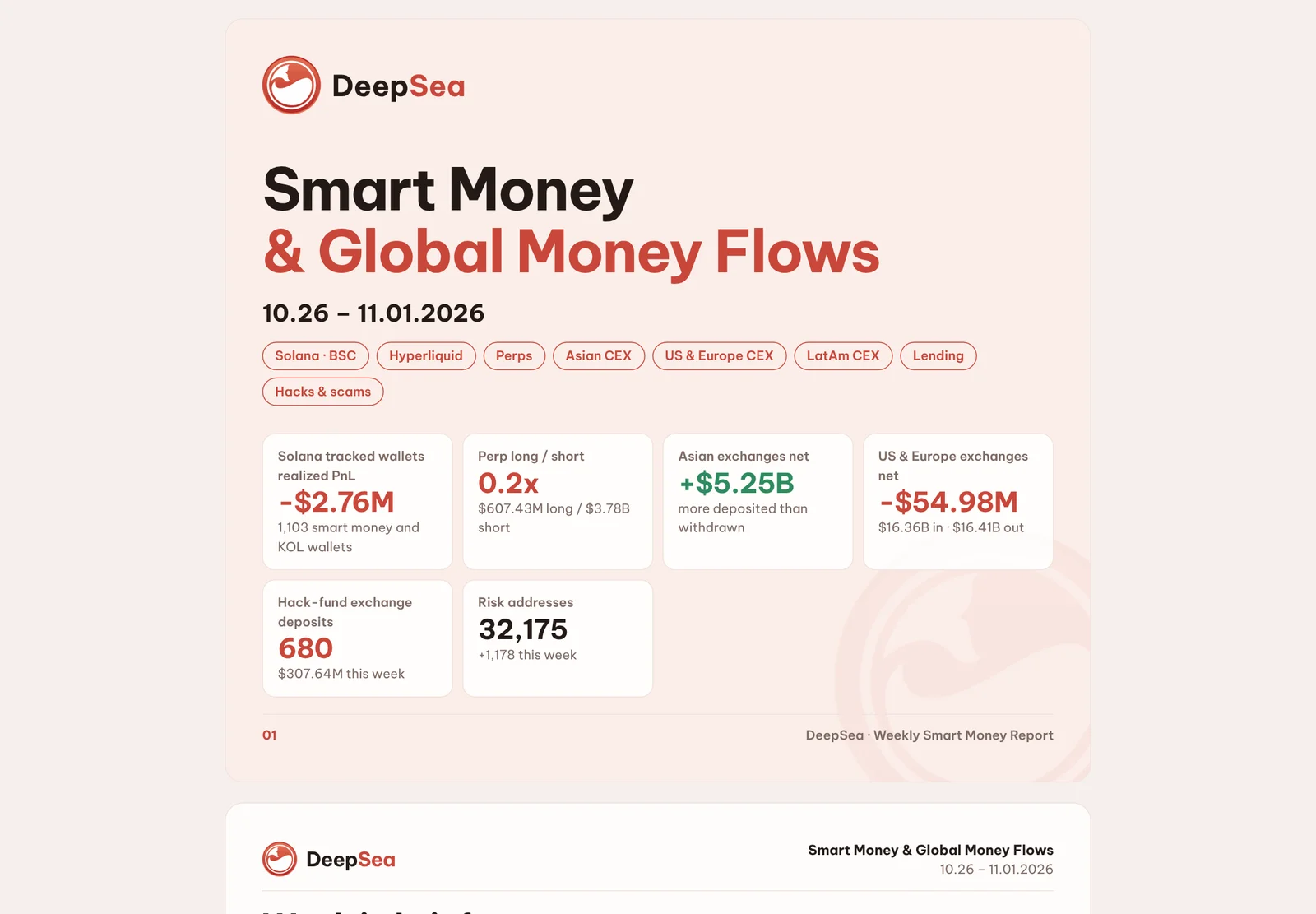
Data: DeepSea (desea.io), checked November 4, 2026, 12:37 a.m. ET.
What happened
On November 3, 2026, CFTC Chairman Michael S. Selig said perpetual futures on individual stocks, which the agency calls Equity Perps, "can begin trading for the first time on CFTC-registered exchanges."
The Commission deemed the contracts approved under its Regulation 40.3 and treats them as security futures, a product type created by a 2000 law that the CFTC and the SEC regulate together. The statement points to a March 2026 memorandum between the two agencies on how they coordinate. It does not name which exchanges or which contracts were approved.
A perpetual future is a bet on a price that never expires. Instead of settling on a fixed date, long and short traders swap a small "funding" payment so the contract price stays close to the real stock price.
The pushback
At 12:35 p.m. ET the same day, Cboe Global Markets announced that it had joined a legal action filed by the Capital Markets Alliance, a group of Cboe, Citadel Securities and Healthy Markets Association, challenging the approval. The group asked for injunctive relief, meaning a court order to block the products for now. The release does not say whether it is a lawsuit or a petition, and it does not name the court.
Cboe argues that stock perps are securities products and belong on registered securities exchanges under US securities law, not on CFTC platforms. It calls the setup regulatory arbitrage and says its objection is about investor protection, not competition. CEO Craig Donohue said Cboe joined "alongside some of the largest U.S. market participants."
The fight is not new. On October 14, Cboe's general counsel wrote to the SEC urging it to abrogate and disapprove Kalshi's proposed rule changes for stock perps. The letter says the contracts have no settlement date, so they do not fit the legal definition of a security future, and that their trades would fall outside the Consolidated Audit Trail, the system US regulators use to watch for cross-market manipulation.

What a stock perp looks like
The clearest public example is the filing KalshiEX submitted on September 18, 2026. It covers 58 underlyings, including Apple, Nvidia, Tesla, Microsoft, Alibaba's US shares and the SPY and QQQ funds.
- Each contract represents 100 shares, with a minimum tick of $0.005.
- Trading runs from 6 p.m. ET Sunday to 5 p.m. ET Friday, with a one-hour break each day.
- Required margin is 15.50% of market value, so traders put up about $15.50 for every $100 of exposure.
- Funding is paid once a day: longs pay when the contract trades above the stock, shorts pay when it trades below.
Kalshi says it will list the contracts shortly after approval. The CFTC's filings page also shows a separate single stock perpetual futures filing dated September 18 from an exchange listed under the code COIN.
What Kalshi's stock perps would track
underlyings
Why crypto traders care
Perps were born in crypto. Selig's statement builds on the CFTC's earlier approval of a bitcoin perpetual contract, KalshiEX's BTCPERP, which a footnote dates to May 29, 2026. It also contrasts US regulated venues with offshore ones it calls "often unregulated."
HYPE, the token of the on-chain perps exchange Hyperliquid, traded at $84.45 at 12:39 a.m. ET on November 4, up 1.5% in 24 hours, according to CoinGecko.
Timeline
CFTC approves KalshiEX's bitcoin perpetual contract, BTCPERP
KalshiEX files stock perps on 58 underlyings; a second stock perps filing is listed the same day
Cboe urges the SEC to abrogate and disapprove Kalshi's stock perps filings
CFTC Chairman Selig says Equity Perps are deemed approved
Cboe, Citadel Securities and Healthy Markets Association announce legal action
LC Insight analysis
This section is our reading of the facts above, not a statement of fact.
- We think this is the biggest step yet in bringing crypto's favorite product to mainstream US markets. If the approval survives the challenge, US traders could get round-the-clock leveraged stock bets on regulated venues that also list crypto.
- The likely flashpoint is the definition of a security future. Cboe's argument that a contract with no settlement date cannot be one goes to the legal basis of the approval, so the outcome could reshape how far the CFTC can reach into equity products.
- For offshore and on-chain perps venues, a regulated US option means more competition for American users, but it also signals that the product itself is now accepted by a US regulator.
What's next
- Which court hears the Capital Markets Alliance case and whether it grants an injunction
- Whether the SEC acts on Cboe's request to abrogate and disapprove Kalshi's filings
- Which exchanges list the first stock perps, and on what date
- Whether more stock perps filings appear on the CFTC's filings page
Disclaimer. This article is based on public information and the sources listed below as of the update time shown. It is for information only and is not investment, legal or tax advice. Figures may change as companies and authorities publish new data.
Sources
- CFTC, Statement of Chairman Michael S. Selig on Equity Perpetual Futures (November 3, 2026)
- Cboe Global Markets, press release on the Capital Markets Alliance challenge (November 3, 2026, 12:35 p.m. ET)
- Cboe Global Markets, comment letter to the SEC on SR-KALSHIEX-2026-02 (October 14, 2026)
- KalshiEX LLC, perpetual security futures submission to the CFTC (September 18, 2026)
- CFTC, industry filing: Single Stock Perpetual Futures Contract, exchange code COIN (September 18, 2026)
- CoinGecko, Hyperliquid (HYPE) price (November 4, 2026, 12:39 a.m. ET)