Tokenized Treasuries explained: BUIDL, USDY and the $14.2B T-bill market
Tokenized Treasuries are blockchain tokens that stand for shares in funds holding US government debt, and unlike most stablecoins they pay interest. As of November 2, 2026, rwa.xyz counted $14.21 billion across 119 products, led by Ondo's USDY, Circle's USYC and BlackRock's BUIDL.
Key points
- A tokenized Treasury is a token that stands for a share in a fund or note backed by short-term US government debt.
- rwa.xyz counted $14.21 billion in tokenized Treasury products as of November 2, 2026 (data through November 1), down 4.05% in 30 days.
- BlackRock's BUIDL held $2.08 billion with 101 holders and a $5 million minimum subscription, per rwa.xyz.
- Average 7-day yields were about 3.7% a year, but these products carry fund, issuer, smart contract and access risks.
What are tokenized Treasuries?
US Treasury bills are short-term loans to the US government. They are among the safest assets in finance and pay interest. A tokenized Treasury is a crypto token that represents a share in a fund or note that holds those bills, often together with repurchase agreements (overnight loans backed by Treasuries).
The token lives on a public blockchain such as Ethereum or Solana. That means it can move between approved wallets at any hour, be used as collateral in crypto apps, and settle on the chain itself instead of through a fund's usual back office.
The key difference from a stablecoin such as USDC: holders of a tokenized Treasury fund receive the interest. Stablecoin issuers usually keep it.
How big is the market?
As of November 2, 2026, the data site rwa.xyz showed $14.21 billion in tokenized US Treasury products (data through November 1), across 119 assets. That was down 4.05% in 30 days. Holders numbered 85,695, up 1.74% in a week, and the average 7-day yield was 3.71%.
That is small next to the $285.89 billion stablecoin market on the same site, but tokenized Treasuries are one of the largest groups of real-world assets on chain. rwa.xyz counted $39.05 billion in distributed real-world assets overall, excluding stablecoins.
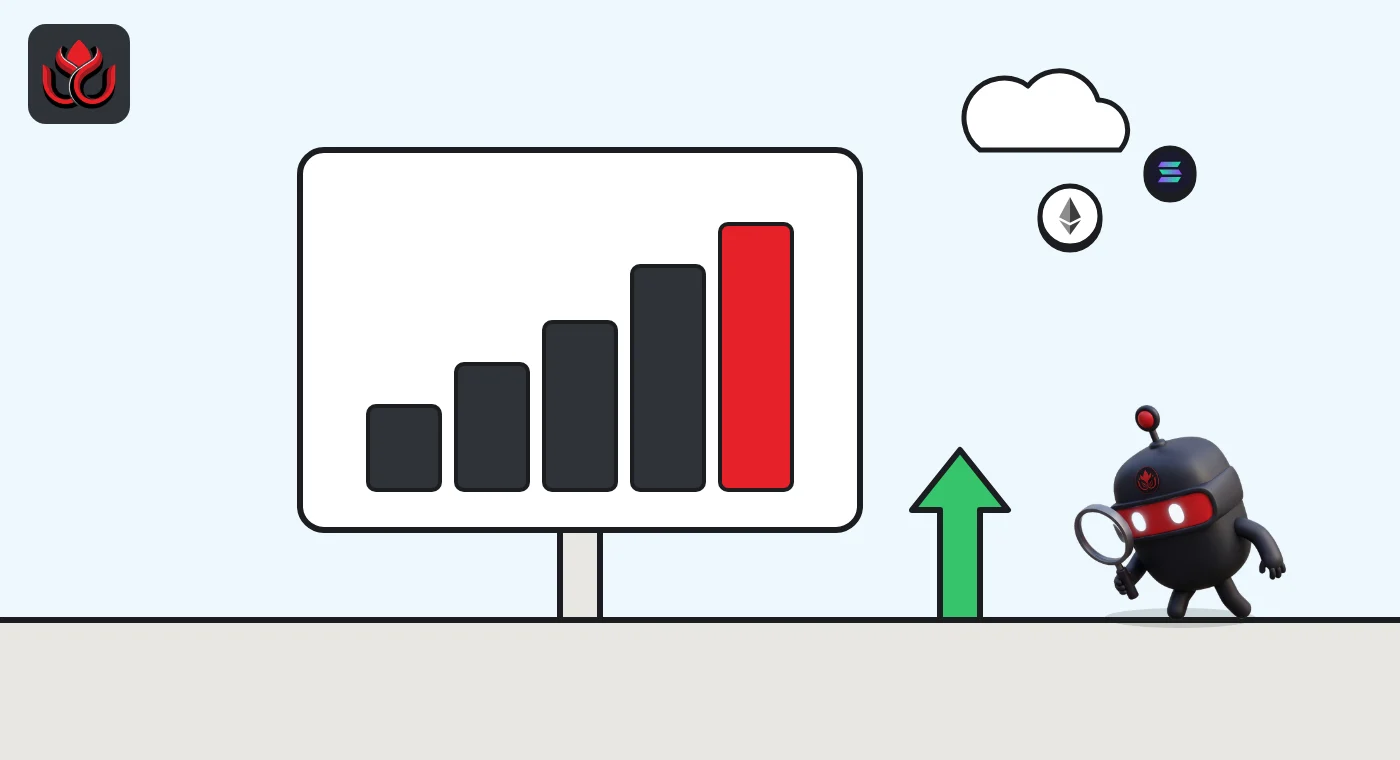
Largest tokenized Treasury products, November 2, 2026
US$ billion
Source: rwa.xyz, Tokenized U.S. Treasury Funds, data through November 1, 2026.
What is BlackRock's BUIDL?
BUIDL is the BlackRock USD Institutional Digital Liquidity Fund. Its rwa.xyz page lists BlackRock as asset manager and Securitize as the tokenization platform, with an inception date of March 20, 2024. The fund carries a Moody's Aaa-mf rating, charges a management fee of 0.20% to 0.50%, and pays its income out to holders rather than adding it to the token price.
As of November 2, 2026, BUIDL held about $2.08 billion, down 7.61% in 30 days, with a 7-day yield of 3.75%. It had only 101 holders, because it is built for institutions. rwa.xyz lists eligible buyers as US qualified purchasers, a legal category for investors with large portfolios. The minimum subscription is 5 million USDC, and the minimum redemption is 250,000 USDC.
BUIDL runs on many chains. The largest share sits on Solana (about 865 million tokens), followed by Avalanche (416 million), Ethereum (about 401 million across two listings) and BNB Chain (about 170 million), with smaller amounts on Aptos, Optimism, Tempo, Arbitrum and Polygon.
BUIDL was once the largest product in this category. It is now third, behind USDY and USYC, as LC Insight reported.
Its yield tracks short-term rates: rwa.xyz showed a 30-day yield of 3.71%, in line with the category average.
Who issues tokenized Treasuries?
The top of the rwa.xyz table mixes crypto-native firms and old-line asset managers. As of November 2, 2026:
- Ondo's USDY led at $2.40 billion. Ondo's whole platform, including other products, held $4.05 billion with about 564,600 holders, per its rwa.xyz platform page.
- Circle's USYC was second at $2.24 billion, from the same company that issues the USDC stablecoin.
- BlackRock's BUIDL, issued through Securitize, was third at $2.08 billion.
- Franklin Templeton had two products in the top five, iBENJI at $1.71 billion and BENJI at $833.7 million.
- JPMorgan's JLTXX, listed under Kinexys Digital Assets, held $792.2 million.
Together these six held about $10.06 billion, roughly 71% of the category. The other 113 products shared the rest.
Who can buy them?
Most tokenized Treasury funds are securities, so they come with access rules. Wallets usually have to be approved before they can hold or receive the token, and many funds are open only to qualified or institutional investors, or only outside the US. BUIDL's $5 million minimum shows how narrow the buyer base can be. Rules differ by product and country, so each fund's own documents decide who can buy.
Big holders also use these tokens as collateral. For example, BNY and Citadel settled a tokenized Treasury and then borrowed cash against it, as LC Insight reported.
Which blockchains do they use?
Many funds issue on several chains at once, so buyers can hold them where they already trade. BUIDL is a good example: rwa.xyz lists it on Solana, Avalanche, Ethereum, BNB Chain, Aptos, Optimism, Tempo, Arbitrum and Polygon.
Across all real-world assets, not only Treasuries, rwa.xyz ranked Ethereum first with $15.1 billion, then BNB Chain with $6.1 billion, Solana with $5.1 billion and Stellar with $3.9 billion as of November 2, 2026. Holders of tokenized real-world assets numbered about 5.49 million, up 7.78% in 30 days.
How are they different from stablecoins?
- Interest: fund holders earn the yield, around 3.7% in early November. Stablecoin holders usually do not.
- Price: stablecoins aim to stay at exactly $1. A fund token's value follows the fund and its interest, so check each product's terms.
- Access: stablecoins move almost freely. Treasury tokens usually need an approved wallet.
- Size: $285.89 billion of stablecoins versus $14.21 billion of tokenized Treasuries on rwa.xyz.
What are the risks?
- Interest-rate risk: yields fall when the Federal Reserve cuts rates.
- Issuer and custody risk: the token is only as good as the fund, its custodian and its legal structure.
- Smart contract and chain risk: bugs or network outages can freeze transfers.
- Liquidity risk: redemptions follow fund rules and minimums. Selling on a secondary market may mean a discount.
- Concentration: a handful of products hold most of the value, and a few large holders can move totals quickly, as BUIDL's 7.61% monthly drop shows.
LC Insight analysis
This section is our reading of the facts above, not a statement of fact.
- October's shrinkage looks more like a few big holders moving money than a loss of appetite for T-bills. With BUIDL at 101 holders, one decision can swing the totals.
- Growth will likely come from collateral, not retail. A token that can be pledged around the clock for loans and margin is useful to trading firms in a way a plain fund share is not.
- Headline yields mean little without access. Check who a product is open to before comparing rates: some are closed to US investors, and BUIDL asks for $5 million.
What's next
- Monthly totals on rwa.xyz and whether USDY keeps the top spot
- New funds run by banks, such as JPMorgan's JLTXX, gaining share
- Crypto exchanges and DeFi apps accepting Treasury tokens as collateral
Frequently asked questions
Is BUIDL a stablecoin?
No. BUIDL is a tokenized share in a BlackRock money-market-style fund. It pays its yield to holders and has a 5 million USDC minimum subscription.
What is the largest tokenized Treasury?
As of November 2, 2026, rwa.xyz listed Ondo's USDY first at $2.40 billion, followed by Circle's USYC at $2.24 billion and BUIDL at $2.08 billion.
What yield do tokenized Treasuries pay?
rwa.xyz showed an average 7-day yield of 3.71% as of November 2, 2026. BUIDL's 7-day yield was 3.75%. Yields change with US interest rates.
Which blockchain has the most BUIDL?
Solana, with about 865 million of BUIDL's roughly 2.08 billion tokens as of November 2, 2026, per rwa.xyz.
Disclaimer. This article is based on public information and the sources listed below as of the update time shown. It is for information only and is not investment, legal or tax advice. Figures may change as companies and authorities publish new data.