

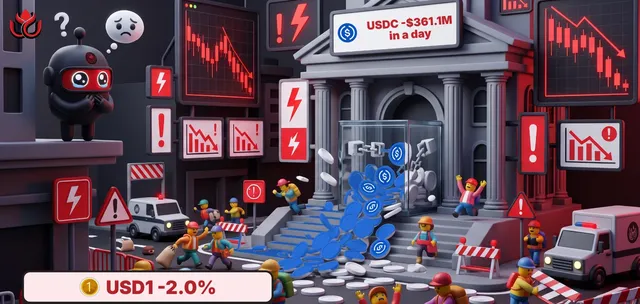
USDC shrank $361 million in a day as bitcoin fell below $70,000. USD1 lost 2%
The 20 biggest stablecoins lost $559 million in value in 24 hours, and Circle's USDC was most of it, CoinGecko data show. Tether's USDT barely moved this time, while a few smaller dollar tokens grew.

KPMG counted Tether Gold's bars: 520,089 ounces for 520,089 tokens
Tether says KPMG gave Tether Gold (XAU₮) a clean audit for 2025, its second Big Four audit after USDT. The gold matched the tokens almost to the ounce.

USDT shrank $2.69 billion in 8 days, but Tether's Ethereum treasury still holds $4.65 billion
Etherscan shows 4.65 billion USDT parked in the wallet it labels Tether: Treasury, which kept sending tokens out through November 12. CoinGecko counts $5.47 billion of USDT as not circulating.

PayPal's PYUSD shrank $136 million in a day and $377 million since its October 27 peak
The PayPal dollar token lost 4.9% of its market value in 24 hours, CoinGecko data show, while Ripple's RLUSD and the Global Dollar held steady. Its price never left $1.
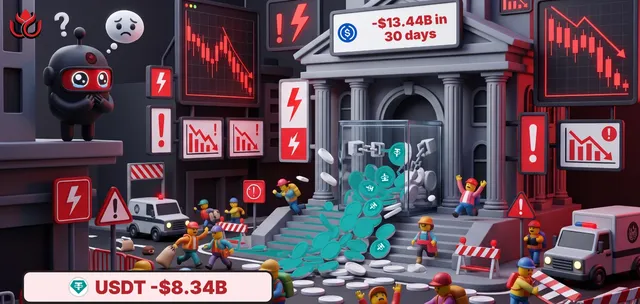
Stablecoins lost $13.4 billion in 30 days. USDT alone shrank $8.3 billion
CoinGecko data shows the three biggest dollar tokens all got smaller since mid-October. Tether's USDT fell every week, and November 11 was its worst day of the month.
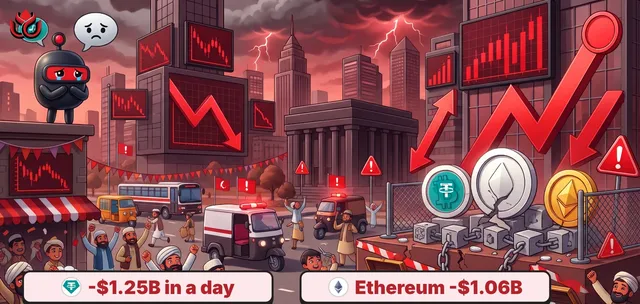
Stablecoins shrank $1.25 billion in a day. USDT and USDC on Ethereum fell $1.06 billion
The eight biggest dollar stablecoins lost $1.25 billion in 24 hours and $4.86 billion in a week, DefiLlama data show. Ethereum and Hyperliquid shed the most, while USDC grew on Solana, Arbitrum and Base and USDT grew on Plasma.

A Monad shark put $3.6 million into earnAUSD, a fifth of the yield token's market value
The busiest shark on Monad bought $16 million of tokens in a day, mostly dollar tokens. Its biggest one-way bet was a yield version of AUSD that CoinGecko values at $17.7 million.

Canada proposes barring banks from issuing stablecoins directly. Subsidiaries only
Budget 2026 proposes to bar federally regulated banks, trust companies and insurers from issuing stablecoins themselves. They would have to use a separate non-financial subsidiary that the Bank of Canada supervises.
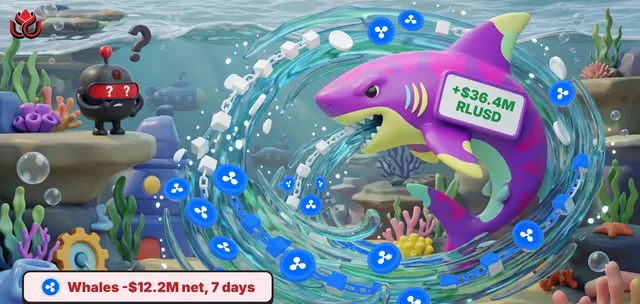
Sharks bought $36.4 million of RLUSD in a day. Over the week, whales sold $12 million net
Two wallets made 37 trades in Ripple's stablecoin in 24 hours. One of them, with $97 million on DeepSea, swaps it in blocks of up to $4.5 million.
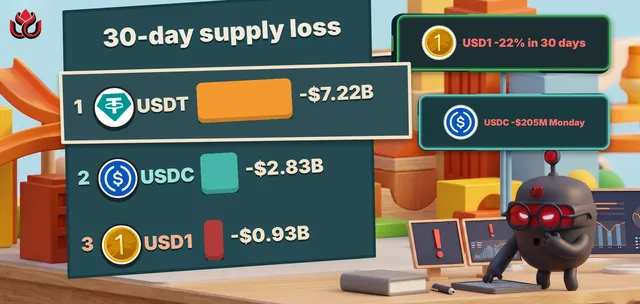
World Liberty's USD1 shrank 22% in 30 days, and USDC lost another $205 million on Monday
USD1 fell from $4.26 billion to $3.32 billion in a month, CoinGecko data shows. USDC kept leaking too, while USDT held flat for a second day.
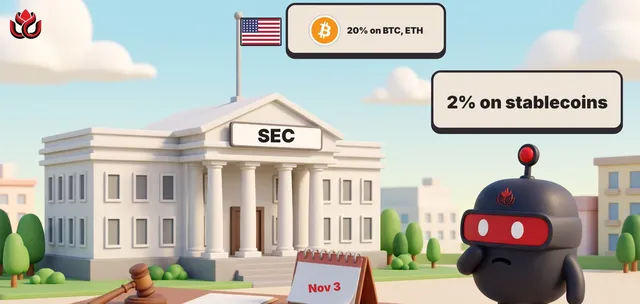
The SEC's crypto capital and records rule for brokers reached the White House on November 3
A proposed SEC rule on how broker-dealers hold capital and keep records for crypto assets reached the White House regulatory office on November 3, 2026. The text is still private. Staff guidance shows where the agency has been heading.
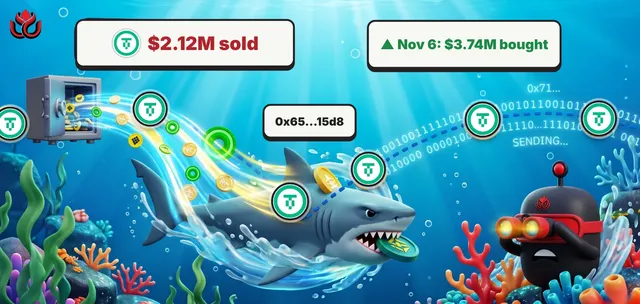
Unichain sharks sold $2.12 million of USD₮0, three days after sharks bought $3.74 million
The flow on Unichain's dollar token flipped. A wallet that was not among Friday's buyers did almost all the selling.

One Monad shark made 267 of 268 trades in a day. Its 30-day loss grew to $1.35 million
One wallet made almost every shark trade DeepSea tracked on Monad, cycling $7.1 million through two dollar tokens. Its losses keep growing.
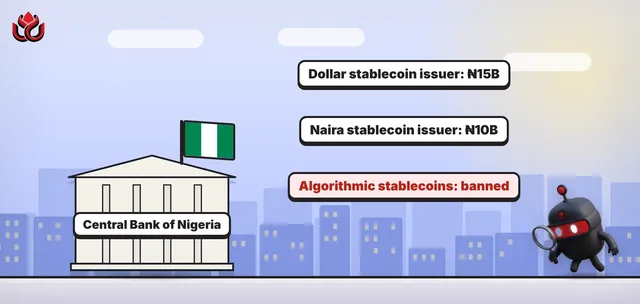
Nigeria sets a ₦15 billion floor for dollar stablecoin issuers and bans algorithmic coins
The Central Bank of Nigeria's new rules say foreign-currency stablecoins can reach Nigerians only through a locally licensed issuer. A foreign license does not count, and peer-to-peer desks need the bank's approval.
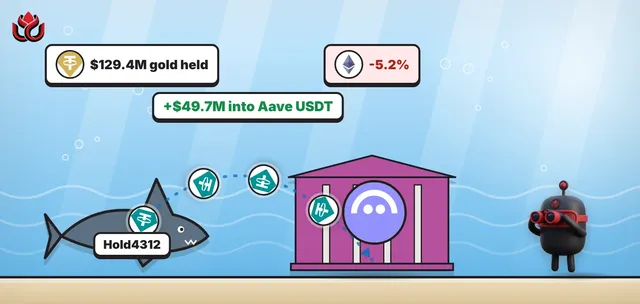
One shark put $49.7 million into Aave USDT as ether fell 5%, and holds $129 million in gold
The same shark wallet we covered on November 5 is back, buying Aave's USDT receipt in five steps. It also holds $129 million of tokenized gold, second only to its restaked ether.
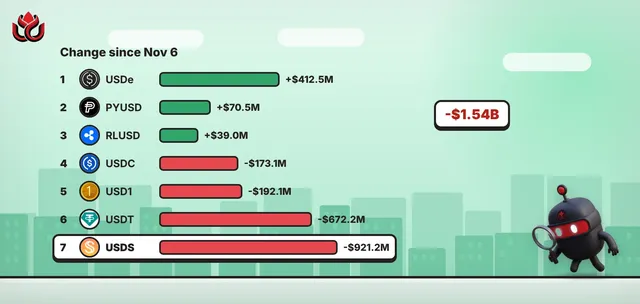
Big stablecoins shrank another $1.5 billion since Friday. Sky's USDS lost $921 million
Eleven of the largest dollar tokens lost $1.54 billion in market value in three days, CoinGecko data shows. Ethena's USDe went the other way, up $412 million.
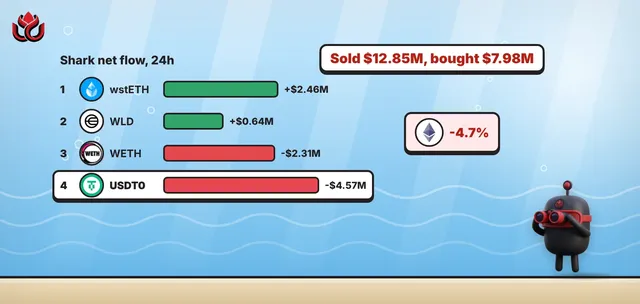
Sharks sold $12.85 million of tokens and bought $7.98 million as ether fell 4.7%
DeepSea's live feed shows big wallets were net sellers on ether's down day. A dollar token on Optimism took most of the selling, and one Monad wallet bought $2.46 million of staked ether.
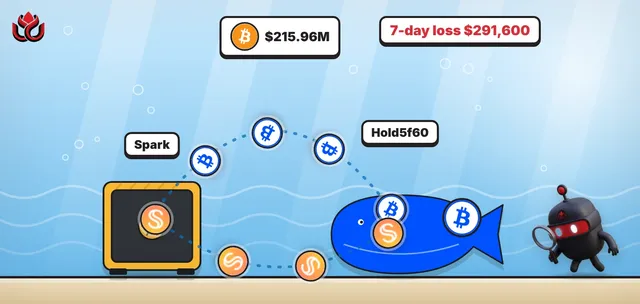
A $216 million bitcoin whale shows a $291,600 weekly loss, but its moves look like loans
DeepSea counts an 82% win rate and a 7-day loss for an Ethereum wallet holding only cbBTC. Its trade list reads like a borrower moving collateral in and out of a lending market.
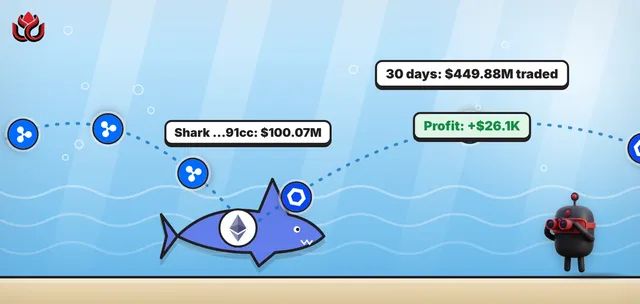
A $100 million Ethereum shark traded $450 million in 30 days. Its profit: $26,100
Three quarters of the wallet sits in three dollar tokens. In four minutes from 12:30 a.m. ET it bought $340,000 of Ripple's RLUSD, sold $131,000 of LINK and made 18 buys of under $10 each.

Ruble token A7A5 still trades on Uniswap 15 months after sanctions, for about $1,500 a day
In August 2025, Treasury sanctioned A7A5's issuer along with Garantex and its successor, Grinex. FinCEN's November 6, 2026, MEXC order put new numbers on all three. Public data shows the token still trades in tiny amounts, but it cannot show the transfers between agents.
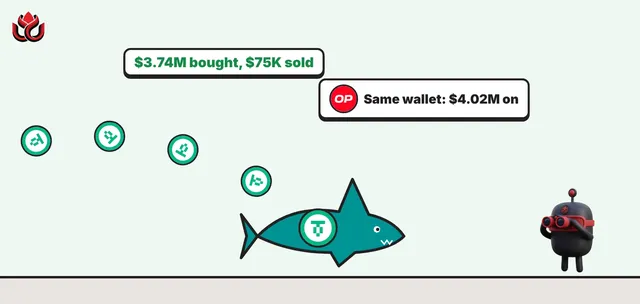
Two sharks bought $3.74 million of USD₮0 on Unichain in a day and sold just $75,000
A day after sharks were net sellers of the dollar token on Unichain, two wallets flipped to heavy buying. One of them also bought $4 million on Optimism.
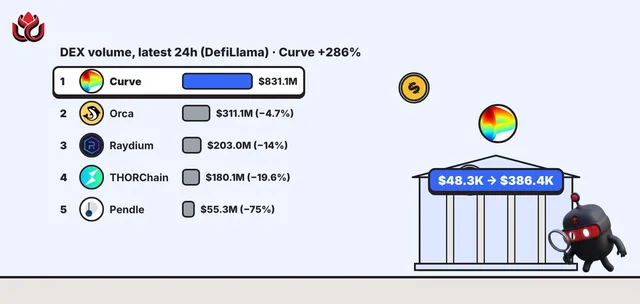
Curve's trading volume nearly quadrupled to $831 million as crypto sold off
DefiLlama shows the stablecoin swap venue went from $215 million to $831 million in a day, while total DEX volume rose less than 3% and several big DEXs slowed. Its fees jumped about eightfold.
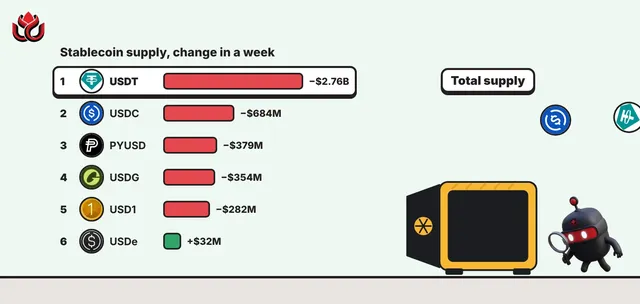
Stablecoin supply shrank $5 billion in six days. USDT fell the most
DefiLlama shows the total supply of dollar stablecoins fell every day from October 30 to November 5, the day bitcoin dropped below $76,000. Tether's USDT supply fell $2.76 billion in a week.
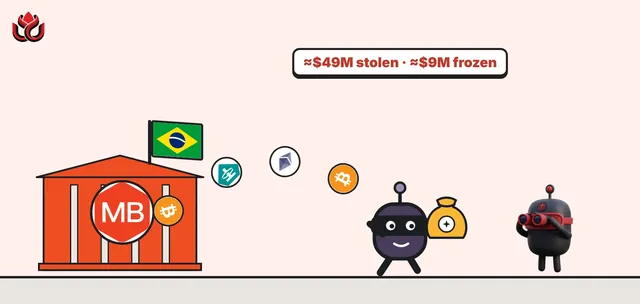
Brazil's Mercado Bitcoin lost about $49 million on 17 chains. It says customers lose nothing
Mercado Bitcoin says it contained a security incident on November 2, 2026, and that no customer will lose assets. Chainalysis puts the theft at about $49 million and says close to $9 million has been frozen.
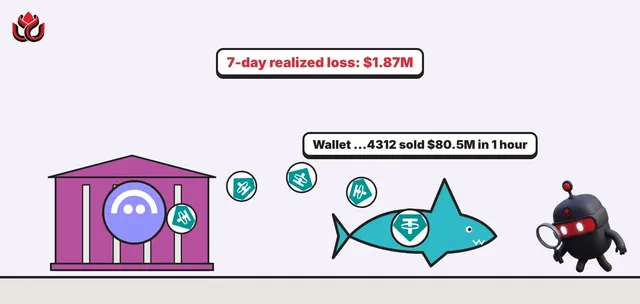
One shark sold $80.5 million of Aave-deposited USDT in an hour. Its 7-day loss: $1.87 million
The Ethereum wallet ending 4312 moved more than $280 million in a day, mostly in and out of Aave. DeepSea's PnL table shows it with the biggest 7-day realized loss it tracks.
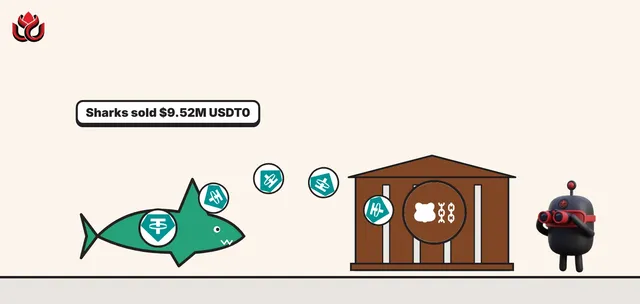
Sharks sold $9.52 million of USD₮0 on Berachain in a day, $3.39 million in the last hour
One busy wallet made 260 shark trades on Berachain, where DeepSea logged 263 in Tether's cross-chain dollar token. A day earlier the 24-hour selling was about a quarter of the size.
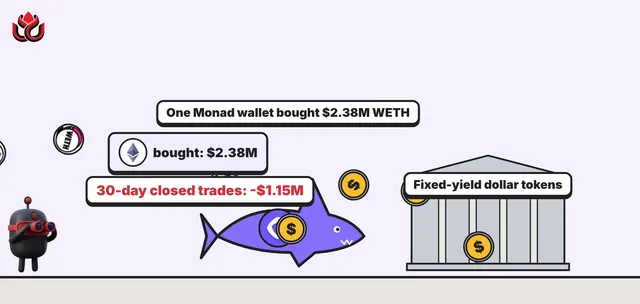
One Monad wallet bought $2.38 million of ether. Its closed trades lost $1.15 million in 30 days
Every shark trade DeepSea logged on Monad in the last 24 hours came from one wallet. It bought wrapped ether and sold fixed-yield dollar tokens.
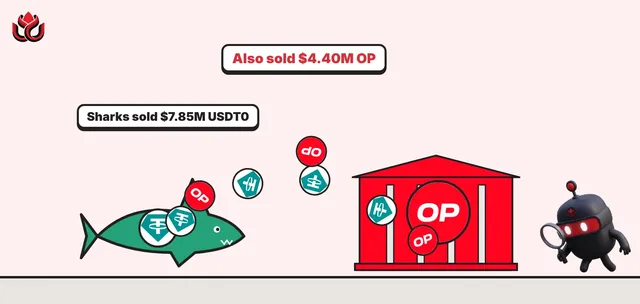
Shark wallets sold $7.85 million of the USD₮0 dollar token on Optimism, a day after buying it
A day ago shark wallets were buying USD₮0 on Optimism. DeepSea's feed now shows them net sellers of almost $3 million, while OP selling kept going.
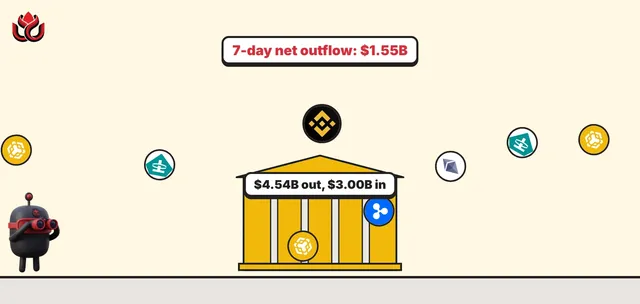
Binance's 7-day flow on DeepSea: a $1.55 billion net outflow after last week's $5.04B inflow
Last week's DeepSea report showed money pouring into Binance. Its live seven-day count now shows $4.54 billion leaving and $3.00 billion arriving.
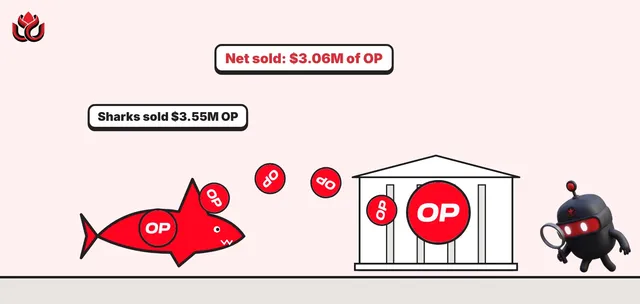
Shark wallets sold $3.55 million of Optimism's OP in a day and bought just $486,000
DeepSea's live feed shows big wallets selling Optimism's token while still parking dollars on the chain. On Berachain, a heavy seller of USD₮0 turned buyer in the last hour.
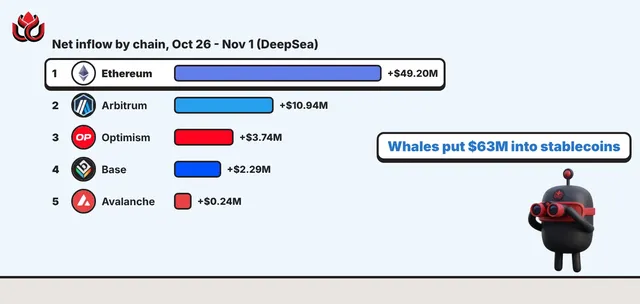
Whales put $63 million into stablecoins and sold a net $27.6 million of other tokens
DeepSea's sector data shows big wallets moving into dollars last week, while smart money kept buying. Ethereum took most of the $66 million net inflow.
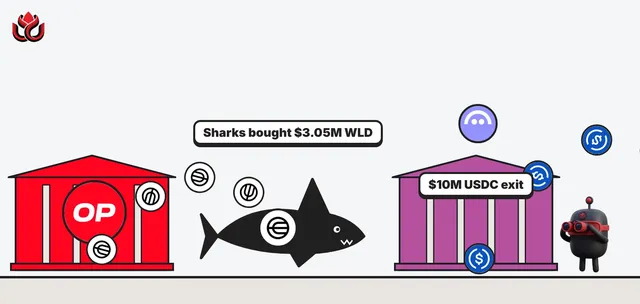
Sharks bought $3.05 million of WLD on Optimism in a day. One Monad wallet traded $15.7 million
DeepSea's live feed shows big wallets loading up on USD₮0 and WLD on Optimism, one wallet churning $15.7 million on Monad and a single $10 million Aave USDC exit on Arbitrum.
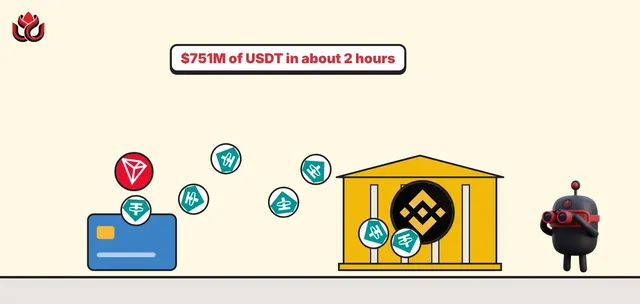
One Tron wallet moved $751 million of USDT through Binance in about two hours
DeepSea's list of the week's largest exchange transfers is all dollar tokens: $2.49 billion in 11 moves, led by Coinbase USDC and a single unlabeled Tron address moving USDT to and from Binance.
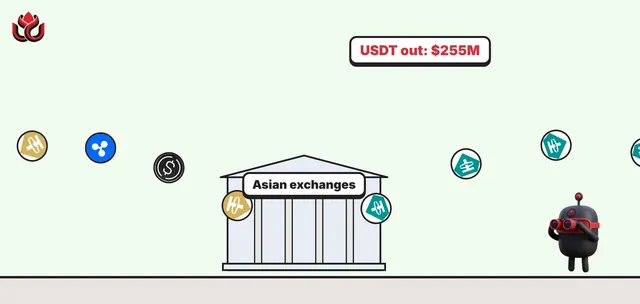
$255 million in USDT left Asian exchanges in a week. Gold tokens, USDe and RLUSD moved in
DeepSea's weekly data shows Asian exchanges losing USDT and USDT0 while tokenized gold and smaller dollar tokens arrived. In the last 24 hours, one shark wallet traded $47.8 million of RLUSD on Ethereum.
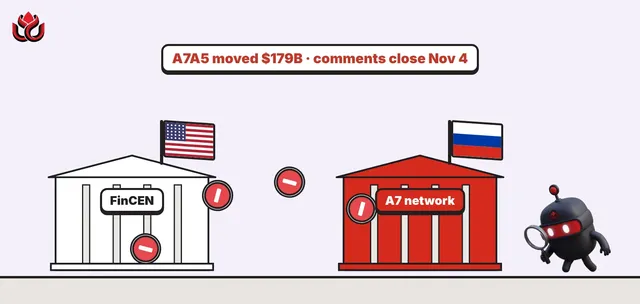
A7A5 stablecoin network moved $179 billion. FinCEN wants US banks and crypto firms out
A Treasury proposal would bar about 347,926 US financial institutions, crypto exchanges included, from moving money for the Russia-linked A7 network's front companies. Public comments close November 4, 2026.
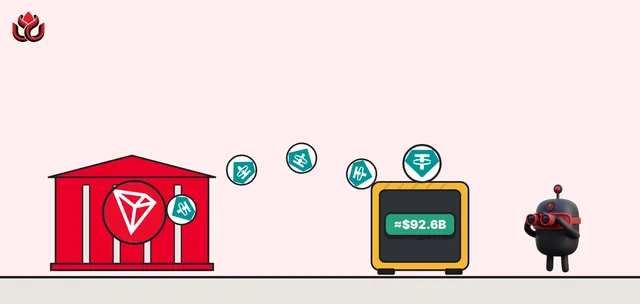
What is TRON? How the chain holding $92.6 billion of USDT really works
TRON is the blockchain where more of Tether's USDT lives than anywhere else: about $92.6 billion on November 2, 2026, per DefiLlama. Here is how its energy and bandwidth fees work, and why 27 elected block makers decide the rules.
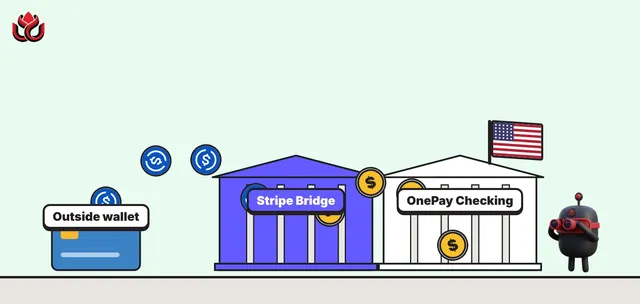
Send USDC on 12 blockchains, get dollars: OnePay adds Stripe-powered checking deposits
Since October 30, 2026, select US OnePay customers can send USDC from an outside wallet straight into OnePay Checking. Stripe's Bridge converts it to dollars with no conversion fee at launch, but the coins are not FDIC insured on the way in.
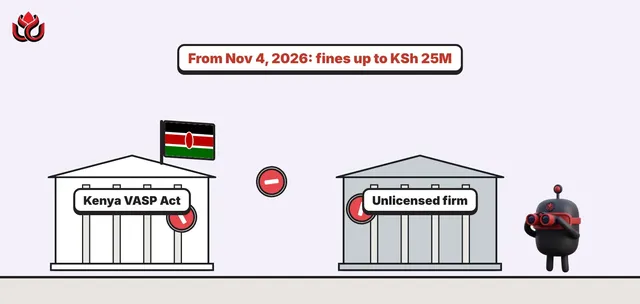
Kenya's crypto grace period ends November 4: KSh 25 million fines for unlicensed firms
Crypto firms already serving Kenya had one year to get licensed under the new VASP Act, and that year ends Wednesday. From November 4, 2026, a company operating without a license risks a fine of up to KSh 25 million.
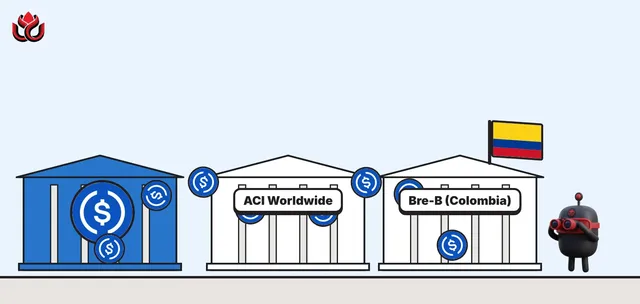
Circle and ACI want banks to settle in USDC on rails they already run. First: Colombia
ACI Worldwide, which built the core of Colombia's Bre-B instant payment system, will plug Circle's USDC into its payments platform for a Colombian pilot. The two companies gave no volumes, no bank names and no launch date.
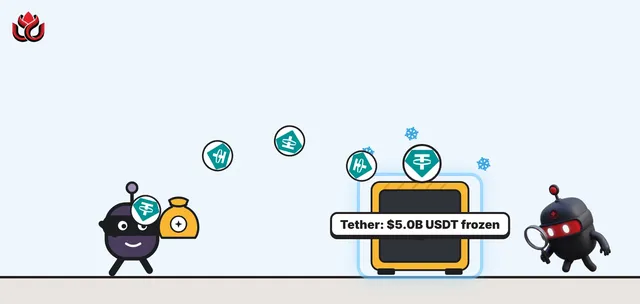
How stolen crypto is traced and frozen, and why thieves dump stablecoins fast
Every blockchain transfer is public, so investigators can follow stolen funds hop by hop. Money can be stopped in two places: stablecoin issuers like Tether and Circle can freeze tokens on-chain, and exchanges can lock accounts when stolen funds arrive.
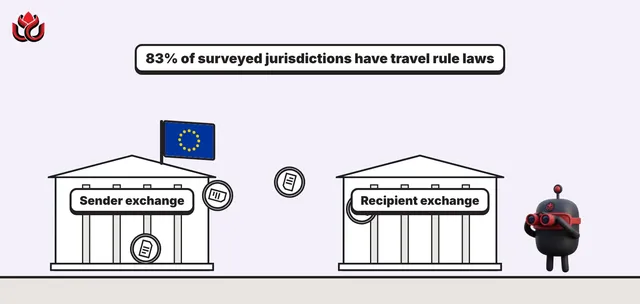
Crypto travel rule explained: what exchanges must send with your transfer
The travel rule requires crypto exchanges and other providers to send the sender's and recipient's details along with a transfer, as banks do with wires. In the EU it applies to every crypto transfer regardless of amount, and 83% of jurisdictions surveyed by the FATF have passed travel rule laws.
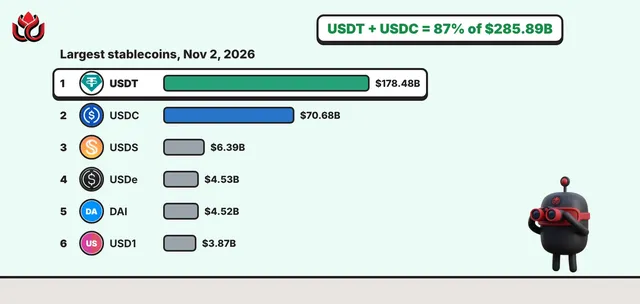
Stablecoins explained: USDT vs. USDC, the two coins that hold 87% of the market
Stablecoins are tokens built to stay worth $1, backed by reserves such as cash and short-term US government debt. As of November 2, 2026, Tether's USDT ($178.48 billion) and Circle's USDC ($70.68 billion) made up about 87% of a $285.89 billion market, per rwa.xyz.
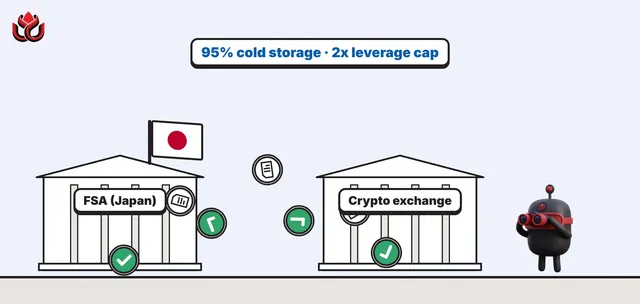
Japan crypto rules explained: FSA registration, 95% cold storage and 2x leverage
Crypto exchanges in Japan must register with the Financial Services Agency under the Payment Services Act, keep at least 95% of customer coins offline, and cap retail leverage at 2x. A 2026 government bill would revise the rules again, borrowing from securities law.

What is address poisoning? The copy-paste scam hiding in your wallet history
Address poisoning is a scam where an attacker plants a lookalike address in your transaction history and waits for you to copy it. No hacking is needed, only a tiny or fake transfer and a hurried user, and the payment cannot be reversed.

Crypto taxes in the US: Form 1099-DA explained, from proceeds to cost basis
Form 1099-DA is the IRS form US crypto brokers use to report your sales. It shows gross proceeds for sales from 2025 and adds cost basis for certain sales from 2026, but you must report all crypto gains and income whether or not you get one.
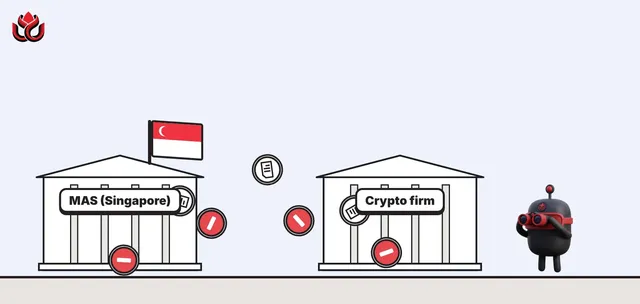
Singapore crypto rules explained: who needs a MAS license, and who won't get one
Crypto firms serving customers in Singapore need a license from the Monetary Authority of Singapore, mainly under the Payment Services Act 2019. Since June 30, 2025, Singapore firms that serve only overseas customers also need a license, and MAS says it will generally not grant one.
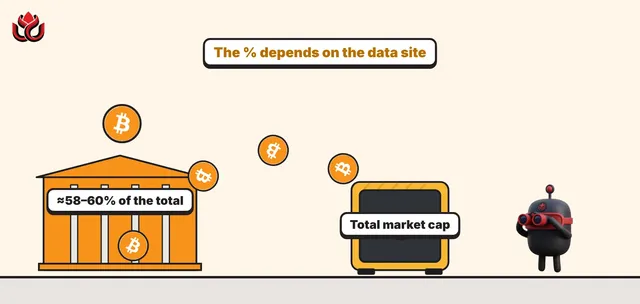
Bitcoin dominance and crypto market cap explained: why sites say 58% or 60%
Total crypto market cap adds up the market value of every tracked coin, and bitcoin dominance is bitcoin's share of it. As of November 2, 2026, the total was about $2.6 trillion to $2.7 trillion and bitcoin's share about 58% to 60%, depending on the data site.
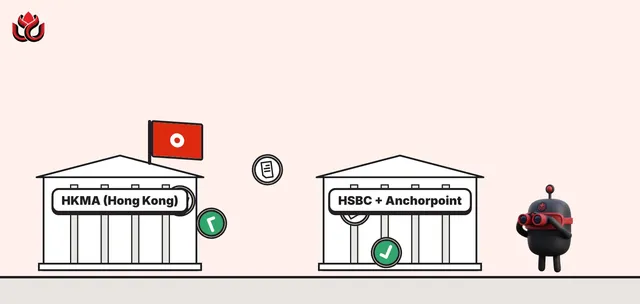
Hong Kong crypto licensing explained: SFC exchange rules, 2 of 36 stablecoin bids
In Hong Kong, crypto exchanges need a license from the Securities and Futures Commission, and anyone issuing a fiat-backed stablecoin needs one from the Hong Kong Monetary Authority. Only two stablecoin issuers had been licensed as of April 2026: HSBC and Anchorpoint Financial.
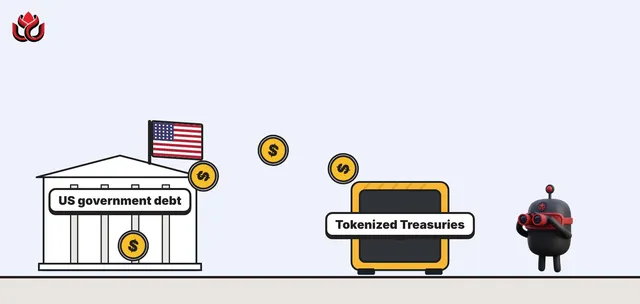
Tokenized Treasuries explained: BUIDL, USDY and the $14.2B T-bill market
Tokenized Treasuries are blockchain tokens that stand for shares in funds holding US government debt, and unlike most stablecoins they pay interest. As of November 2, 2026, rwa.xyz counted $14.21 billion across 119 products, led by Ondo's USDY, Circle's USYC and BlackRock's BUIDL.
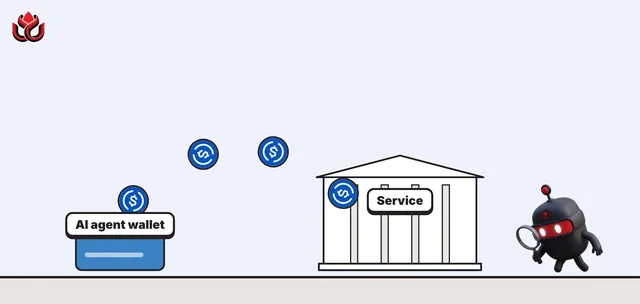
AI agents in crypto explained: how bots get wallets and pay, and what can go wrong
An AI agent is software that takes actions on its own, not just answers questions. In crypto, agents hold wallets and pay for things in stablecoins, often through the x402 protocol, with spending limits their owners may or may not switch on.

What is Sky Protocol and USDS? The former MakerDAO and its 3.80% savings rate
Sky is the protocol formerly known as MakerDAO. It issues USDS, a dollar stablecoin, and sUSDS, a savings token that earned the Sky Savings Rate of 3.80% shown on Sky.money on November 2, 2026, a rate set by vote and not guaranteed.
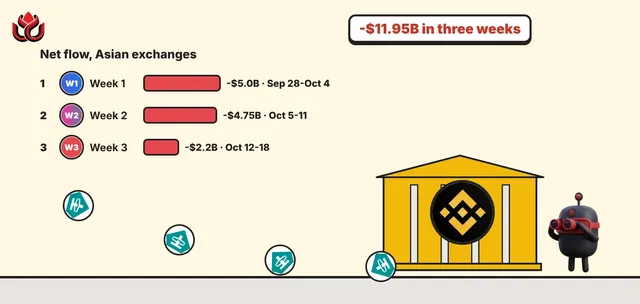
Asian exchanges lost $11.95 billion in three weeks, most of it USDT leaving Binance
DeepSea's data shows a steady stablecoin exodus from Asian exchanges starting September 28, weeks before Binance was hacked. Western exchanges barely moved, while smaller dollar tokens began to swing.
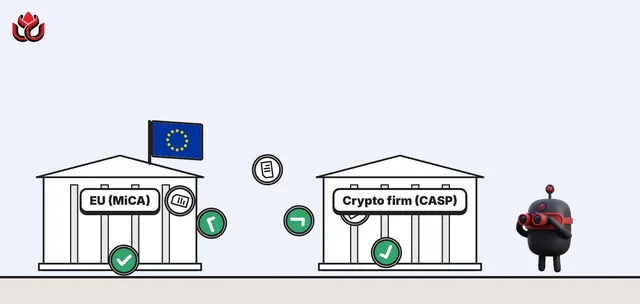
MiCA explained: the EU crypto law, CASP licenses, stablecoin rules and key dates
MiCA is the EU's rulebook for crypto: firms that offer crypto services need a license from a national regulator, and stablecoins face strict reserve and supervision rules. It has applied in full since December 30, 2024, and the last transition window closed on July 1, 2026.
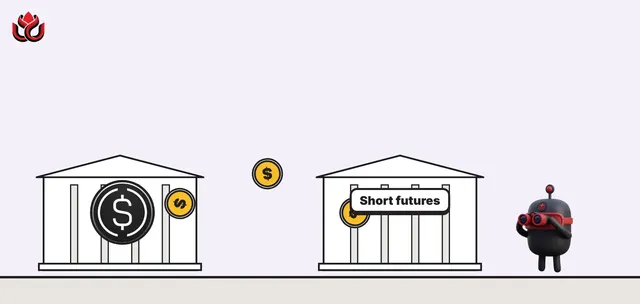
What is Ethena USDe? How the hedged synthetic dollar works and what can break it
USDe is Ethena's synthetic dollar. It is backed by crypto and stablecoins, with the crypto's price risk canceled out by short futures, and its staked version, sUSDe, earns from that trade until funding rates turn against it.
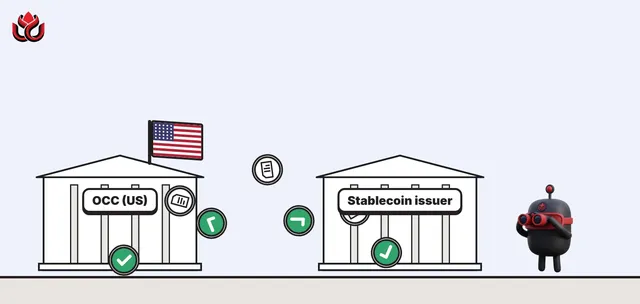
GENIUS Act explained: what the US stablecoin law requires and who enforces it
The GENIUS Act is the US federal law for payment stablecoins. It requires full reserves, quick redemption and no interest for simply holding a token, and it takes effect on January 18, 2027, under the OCC's final rule.
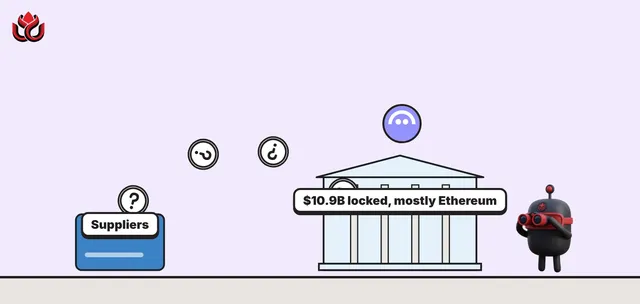
What is Aave? How the $10.9B DeFi lending protocol works and what can go wrong
Aave is a set of smart contracts where people supply crypto to earn interest and borrow against collateral, with no bank in the middle. As of November 2, 2026, DefiLlama counted about $10.9 billion locked in it, most of it on Ethereum.
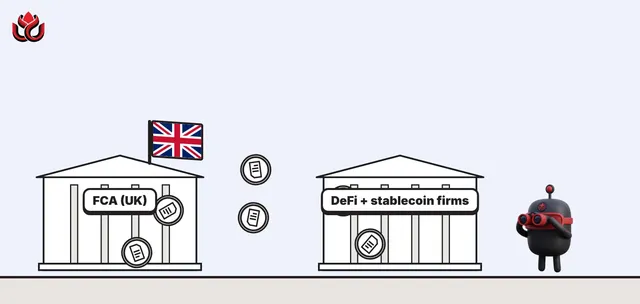
Code is not a shield: the FCA's draft crypto map covers DeFi, comments due November 18
The UK regulator wants views by November 18, 2026, on draft guidance about when DeFi, stablecoin payments, market making and tech services need a license. Using smart contracts does not settle the question on its own.
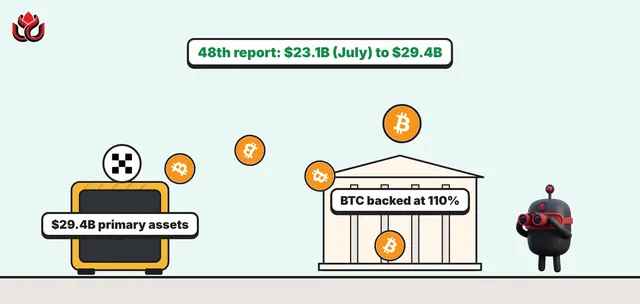
OKX's 48th reserve report shows $29.4 billion, up 27% in three months, with BTC at 110%
OKX marked four years of monthly proof-of-reserves reports on October 30. Its primary assets rose from $23.1 billion in July to $29.4 billion, and every listed coin is backed at least 1:1. Here is what the report proves and what it leaves out.
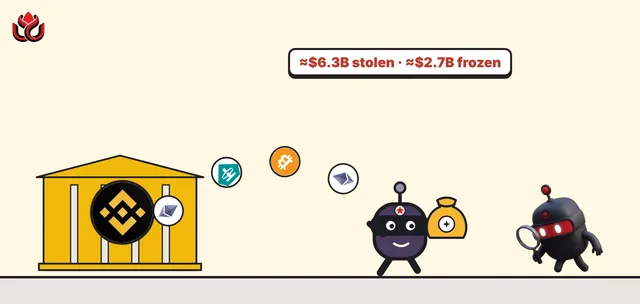
Binance lost a record $6.3 billion. Who froze $2.7 billion of it?
Attackers emptied Binance's hot wallets on October 29 in the biggest crypto theft on record. Stablecoin issuers froze about $2.7 billion, the FBI blames North Korea, and Binance says users will not pay.
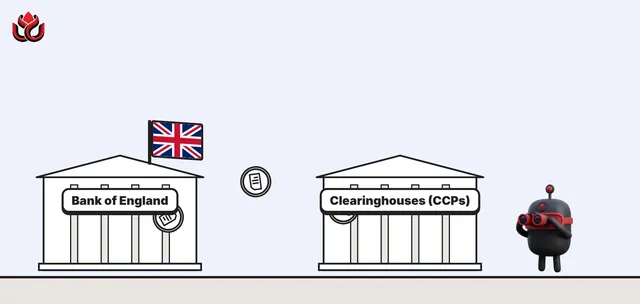
Tokenized gilts as margin? The Bank of England says yes; stablecoins must wait
The Bank of England says clearinghouses can already accept tokenized versions of collateral they take today, and set out what they must check first. Stablecoins, tokenized money funds and tokenized gold get questions, not approval.

BNB Chain's Jenner hard fork walls off 5% of every block for payments. Who gets in?
Jenner went live on the BSC testnet on October 28, 2026. It reserves block space for payments, adds a native token standard with freeze and seizure powers, and gives smart contracts millisecond time. Mainnet has no date yet.

RLUSD's big week: a federal trust bank on Monday, an A2 Moody's rating on Tuesday
Ripple's $2.5 billion stablecoin won final OCC approval for a national trust bank to hold its reserves, then got an investment-grade A2 rating from Moody's a day later. It still trails PayPal's PYUSD.

Aave weighs a 60 million cap for USAT on Avalanche, where its supply is zero
Aave Labs wants USAT, the Anchorage-issued dollar stablecoin built with Tether's technology, on Aave V4's Avalanche hub. Risk firm LlamaRisk backs it as borrow-only at a fixed $1, but flags an uncapped mint key and a bridge that is not live yet.
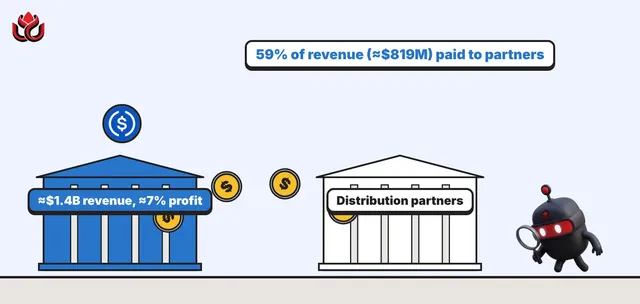
Circle earned $1.4 billion and kept about 7 cents per dollar. Where did the rest go?
Circle says 59% of its first-half 2026 revenue went to the exchanges and apps that distribute USDC. A September filing shows how one of those deals, with Binance, works.
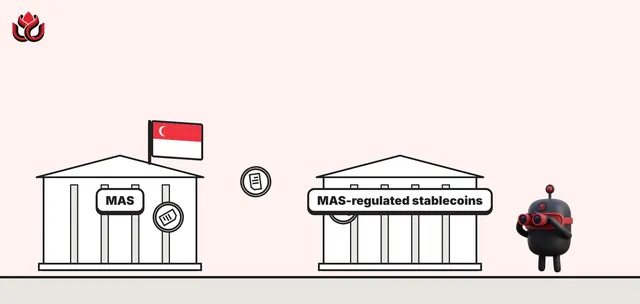
No interest, par redemption, stress tests: Singapore drafts its stablecoin law
MAS wants to ban interest on MAS-regulated stablecoins and recognize a few foreign ones. Seven weeks later, the central banks of Malaysia and Thailand joined its BLOOM project for cross-border digital money.
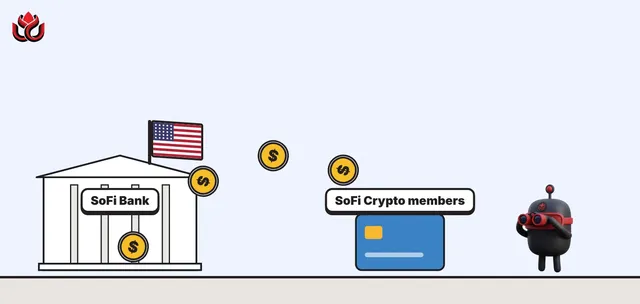
4.40% on a token: SoFi launches the first national bank-issued tokenized deposit for consumers
SoFi Earn (SOFIE) turns a dollar on deposit at SoFi Bank into a token that pays 4.40% and keeps FDIC coverage. Swap it for SoFi's stablecoin to spend or send, and that coverage ends.
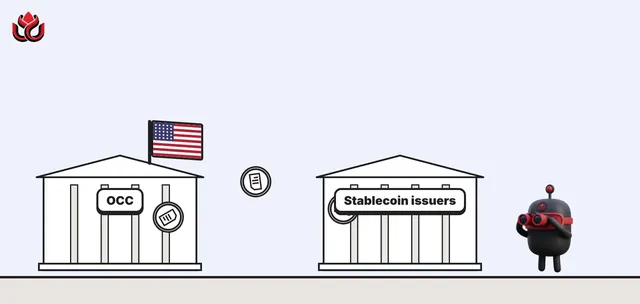
Stablecoin issuers need OCC approval by January 18, 2027. Applications are not open yet
The US bank regulator finalized its GENIUS Act rule on October 21, 2026. Issuing a US payment stablecoin without approval becomes a crime in January, and existing issuers will lean on waivers.
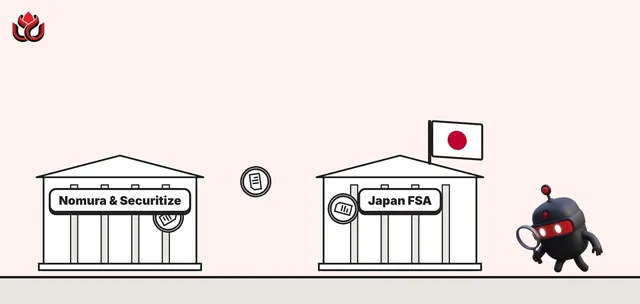
Japan's FSA wants an on-chain finance roadmap by early 2027. Who is at the table?
Japan's Financial Services Agency has opened two new tracks in three weeks: a cross-ministry forum on on-chain finance in the AI era, and a study group on digital and decentralized finance that heard from Nomura and Securitize first.
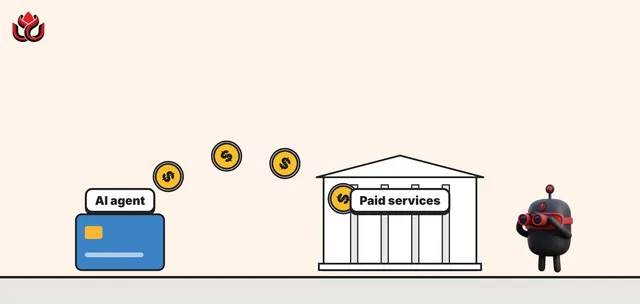
Mastercard lets AI agents pay their own way: nine payments, one budget, no invoices
Mastercard opened early access to Agent Pay for Machines, which lets AI agents buy services on their own within a spending limit set by a human. It runs on the x402 standard and can settle in cash or stablecoins on Base.

USDC is the first of 45 EU stablecoins called 'significant.' What changes on November 12?
The European Banking Authority has classified Circle's USDC as a significant e-money token under MiCA, the first in the EU. From November 12, 2026, the EU banking watchdog takes direct charge of the reserves that back it.

Out by January 8? ESMA tells EU crypto firms to drop non-MiCA stablecoins
The EU's markets watchdog says licensed crypto firms should stop offering stablecoins that break MiCA rules and clear old client positions within three months. Warning customers is not enough.
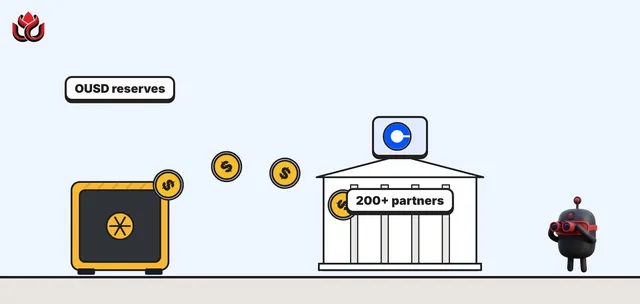
Visa, Mastercard, Stripe, Coinbase and Shopify launch OUSD, and hand partners the interest
Open Standard's dollar stablecoin went live on September 30 with more than $1 billion in launch liquidity and over 200 partner companies. Partners, not the issuer, keep most of the reserve income. Circle is not on the list.
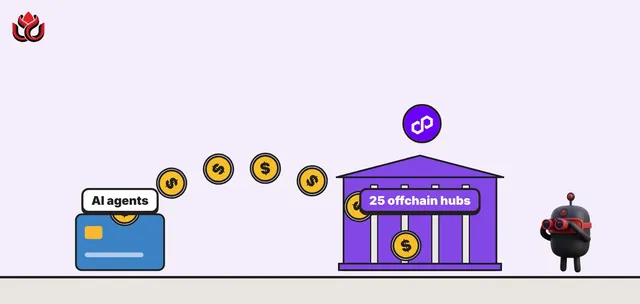
Polygon claims 11 million payments per second. Almost none of them touch the chain
Polygon Labs says its new agent pay channels processed more than 11 million payment updates per second in tests. The number is real, but it measures offchain hubs on a devnet, not Polygon's blockchain.

Crypto fees of $10 or less could go tax-free as House panel backs bill 38 to 5
The Digital Asset Tax Certainty Act would end tax on small network fees, simplify the tax on dollar stablecoins and bring wash-sale rules to crypto. Congress's own scorekeeper says it raises about $1.5 billion over seven years.
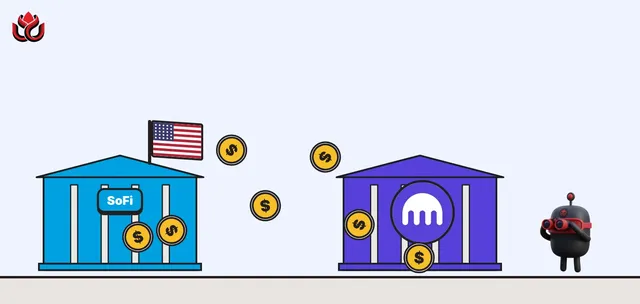
Kraken's parent plugs into SoFi: 24/7 dollar settlement and a bank-issued stablecoin
SoFi will route some crypto trades for its 15.8 million members through Kraken Prime, and Kraken will list SoFiUSD, a stablecoin issued by SoFi Bank. Kraken's institutional clients also get dollars that settle at any hour, weekends included.