

HYPE rose 4% as bitcoin fell 5%. Longs pay on 84% of its $2.6 billion in futures bets
Hyperliquid's token was the best performer among CoinGecko's 50 largest coins on the day bitcoin fell below $70,000. Futures traders kept betting on it to rise, and on Hyperliquid itself HYPE bets now outweigh ether's.

USDC shrank $361 million in a day as bitcoin fell below $70,000. USD1 lost 2%
The 20 biggest stablecoins lost $559 million in value in 24 hours, and Circle's USDC was most of it, CoinGecko data show. Tether's USDT barely moved this time, while a few smaller dollar tokens grew.
Nvidia bets traded $1.95 billion on Hyperliquid in a day, more than ether, as bitcoin fell
In the 24 hours to 6:38 a.m. ET Friday, the day after Nvidia announced its CEO's exit, its main perpetual market on Hyperliquid outtraded ether's and trailed only bitcoin's. Stock and commodity markets now hold 35% of the exchange's open bets, CoinGecko data show.

Bitcoin fell below $70,000. Shorts now pay longs on 60% of its $43.7 billion in futures bets
Funding turned negative on seven of the ten biggest bitcoin perpetual markets as the price fell 5% in a day, CoinGecko data show. Solana bets leaned even harder toward a fall. XRP and zcash bets did not.

Ether fell 14% in a week, yet 912,000 ETH is waiting in line to be staked
Ethereum's entry queue holds 3.5 times more ether than its exit queue, Validator Queue data show. SharpLink's labeled wallet staked another 128 ETH on November 12 as the price slid.

One company sold its last 211 bitcoin at $76,000. Strategy bought 1,036 at $79,012
Hyperscale Data says it has sold all its bitcoin, about 1,113 BTC since July. Strategy kept buying, but spent more than twice as much buying back its own preferred stock. Bitcoin now trades at $68,521.

USDT shrank $2.69 billion in 8 days, but Tether's Ethereum treasury still holds $4.65 billion
Etherscan shows 4.65 billion USDT parked in the wallet it labels Tether: Treasury, which kept sending tokens out through November 12. CoinGecko counts $5.47 billion of USDT as not circulating.

Stablecoins lost $13.4 billion in 30 days. USDT alone shrank $8.3 billion
CoinGecko data shows the three biggest dollar tokens all got smaller since mid-October. Tether's USDT fell every week, and November 11 was its worst day of the month.
Stablecoins shrank $1.25 billion in a day. USDT and USDC on Ethereum fell $1.06 billion
The eight biggest dollar stablecoins lost $1.25 billion in 24 hours and $4.86 billion in a week, DefiLlama data show. Ethereum and Hyperliquid shed the most, while USDC grew on Solana, Arbitrum and Base and USDT grew on Plasma.
Lighter's LIT rose 10%, and Hyperliquid holds more LIT bets than Lighter itself
LIT climbed to $3.47 while Lighter's fees held near $260,000 a day on DefiLlama. Rival Hyperliquid carries $61.4 million of open LIT bets, against $39.1 million on Lighter's own market.

Rumor vs record: a viral post credited to Musk said Binance holds 80% of crypto. It does not
A viral post credited to Elon Musk said Binance holds about 80% of the crypto market and urged users to leave. We checked each line against CoinGecko's exchange data and DeepSea's wallet tracker. The 80% figure does not hold up.

Zcash fell 9% in two days. Open bets on its six biggest futures markets fell 40%
ZEC slid from $1,279 to about $1,160 since November 8. Over the same stretch, open interest on Hyperliquid, OrangeX, CoinW, Gate, OKX and Bybit dropped from $2.51 billion to $1.50 billion, CoinGecko data show.
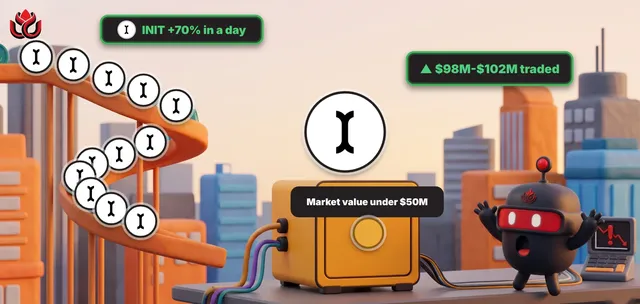
Initia's INIT jumped about 70% in a day, and traders swapped twice its market value
INIT climbed from about $0.12 to $0.22 in 24 hours, with $98 million to $102 million of trading against a market value under $50 million. Binance carried 43% of it, and a Turkish lira pair led every market.
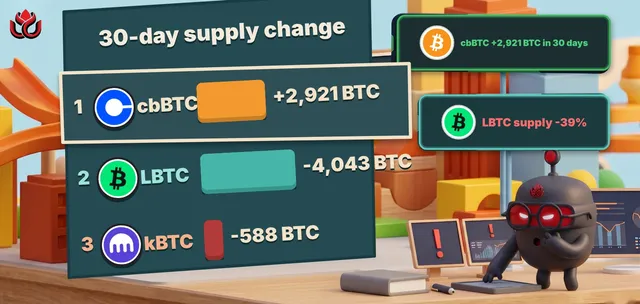
Coinbase's cbBTC gained 2,921 bitcoin in 30 days. Lombard's LBTC lost 39% of its supply
Bitcoin is leaving most wrapped tokens on other chains, CoinGecko supply data shows. Coinbase's version was the exception, until it gave back 891 BTC in a day.

Hyperliquid's oil market fell 7% and a chip-stock market rose 21%. Crypto bets shrank $420M
Hyperliquid's crypto markets held $9.18 billion of open bets, down from $9.60 billion a day earlier. Its stock and commodity markets now hold a third of the total.
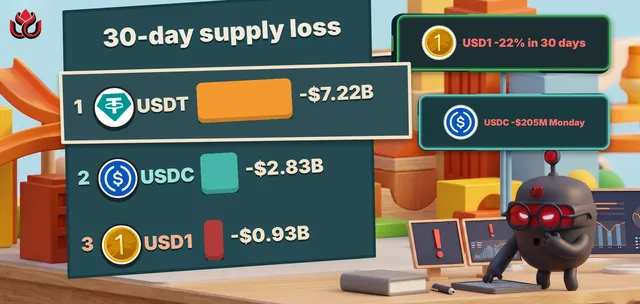
World Liberty's USD1 shrank 22% in 30 days, and USDC lost another $205 million on Monday
USD1 fell from $4.26 billion to $3.32 billion in a month, CoinGecko data shows. USDC kept leaking too, while USDT held flat for a second day.
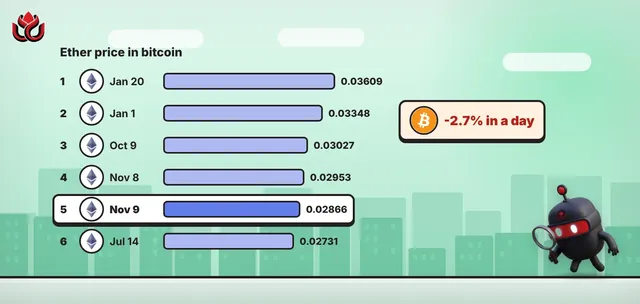
One ether now buys 0.0286 bitcoin, the least since mid-July
Ether lost 2.7% against bitcoin in a day after Sunday's sell-off. CoinGecko's daily data shows no lower close since July 14.
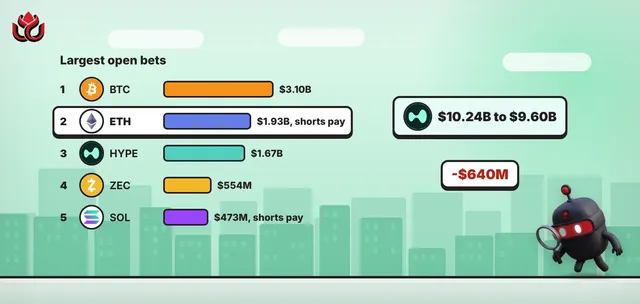
Hyperliquid's crypto bets shrank $640 million since Friday, and ether shorts now pay
CoinGecko's per-market data puts Hyperliquid's open bets at $14.0 billion after Sunday's ether drop. Its $1.93 billion ether market now has negative funding, while bitcoin's does not.
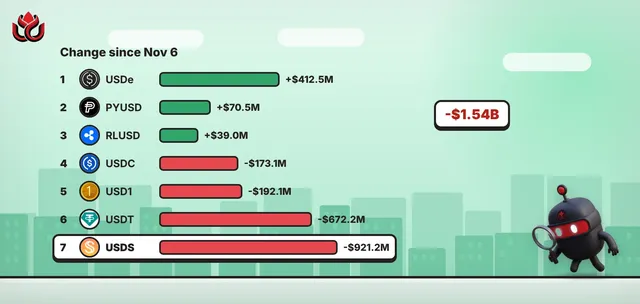
Big stablecoins shrank another $1.5 billion since Friday. Sky's USDS lost $921 million
Eleven of the largest dollar tokens lost $1.54 billion in market value in three days, CoinGecko data shows. Ethena's USDe went the other way, up $412 million.
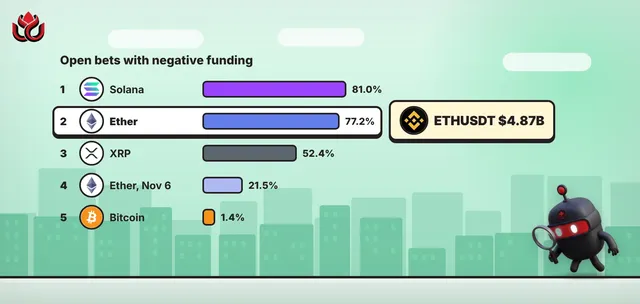
Shorts now pay longs on 77% of ether's open futures bets. On Friday it was 21.5%
After Sunday's 4.6% drop, funding turned negative on Binance's biggest ether market. Bitcoin barely moved: 1.4% of its bets lean short.
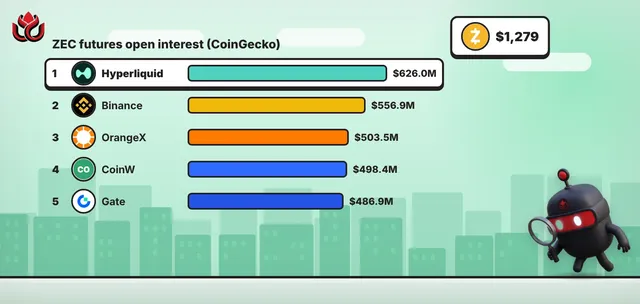
Hyperliquid holds $626 million of open Zcash bets, more than Binance's $556.9 million
On a quiet Sunday, Zcash was the second most traded market on Hyperliquid, ahead of ether. CoinGecko's data shows the on-chain exchange now carries the largest pile of open ZEC futures of any venue.
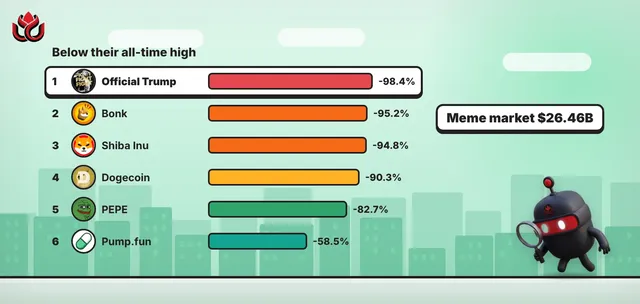
Is the memecoin easy-money era over? The 12 biggest memecoins sit 44% to 98% below their highs
Traders are arguing about whether memecoins still pay. We skipped the opinions and pulled the numbers: prices against all-time highs, Pump.fun's revenue and the size of the meme market today.
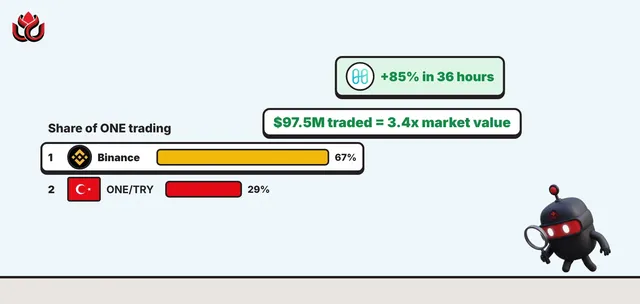
Harmony's ONE jumped 85% in a day and a half. Trading hit 3.4 times its market value
ONE went from about $0.00106 to $0.00196 on CoinGecko as daily trading rose from about $2 million to $97 million. We could not confirm an official reason for it.

Rumor vs record: was Chainalysis hit by AI, and did attackers see case files?
Claims about the Chainalysis breach kept spreading as the company posted its November 6 update. We checked eight of them against Chainalysis's own incident page: two are wrong or out of date, and two have no evidence behind them yet.
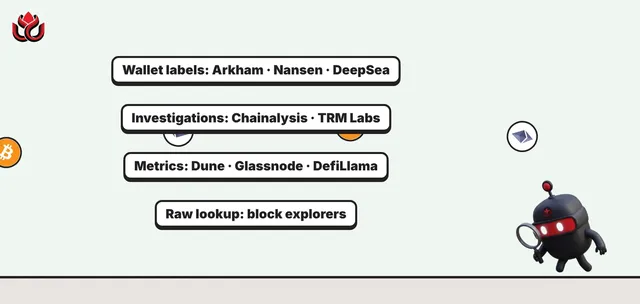
What 9 on-chain analytics tools are built for, from block explorers to compliance suites
Arkham, Nansen, Chainalysis, TRM Labs, Dune, Glassnode, DefiLlama, block explorers and DeepSea all read public blockchain data, but each is built for a different job. Here is what each one does, what is free and who uses it, from each tool's own site.
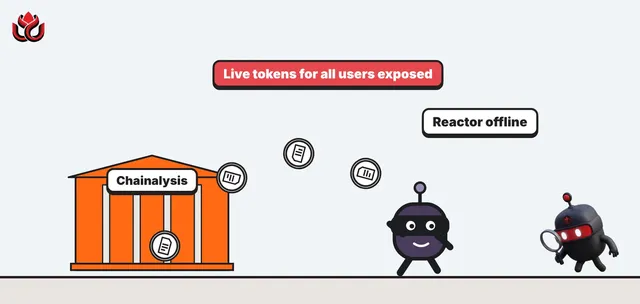
Chainalysis now says login tokens for every user were exposed. All must reset passwords
The crypto tracing firm first said only names and emails were reached. Its latest update says live tokens for every user and password hashes were exposed, and its Reactor and Data Solutions products are still offline.
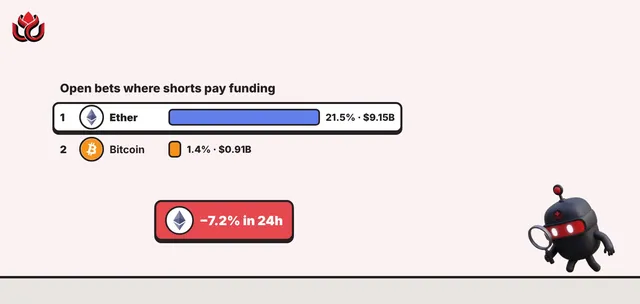
Shorts are paying longs on 21.5% of ether's open futures bets, against 1.4% for bitcoin
CoinGecko's data on 287 bitcoin and ether perp markets shows short sellers paying to hold their bets on 21.5% of ether's open interest, against 1.4% for bitcoin, a day after the sell-off.
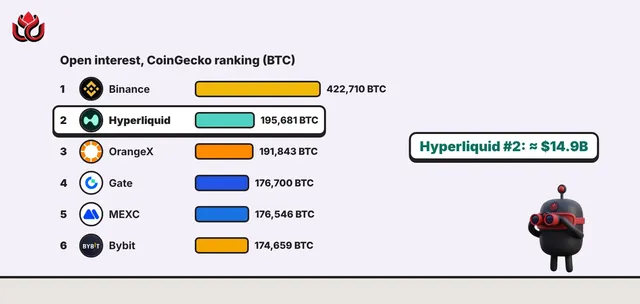
Hyperliquid holds $14.9 billion in open bets, second only to Binance on CoinGecko
CoinGecko ranks Hyperliquid second of all derivatives exchanges by open interest, about $14.9 billion. Its traders also churn their positions far less than on centralized rivals.
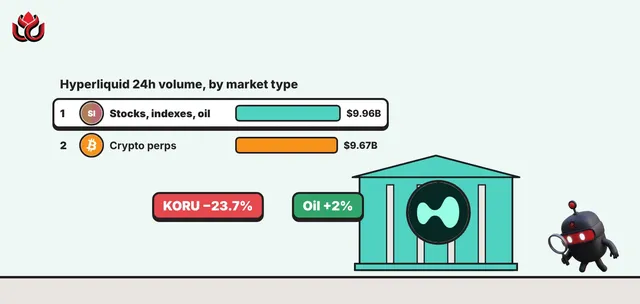
Stock and oil bets outtraded crypto on Hyperliquid: $9.96 billion vs. $9.67 billion
CoinGecko's market data for Hyperliquid shows its 165 builder-run markets, almost all on stocks, indexes and commodities, did more volume than its 179 crypto perps as bitcoin fell 5%.
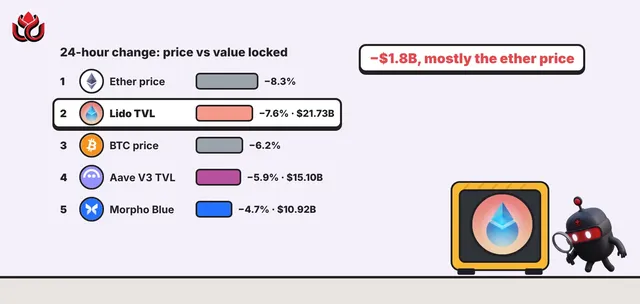
Lido lost $1.8 billion in value in a day. Did anyone actually leave?
DefiLlama shows DeFi's biggest protocols shrank 4% to 8% in 24 hours. Compared with CoinGecko prices, most of that looks like falling prices, not withdrawals.
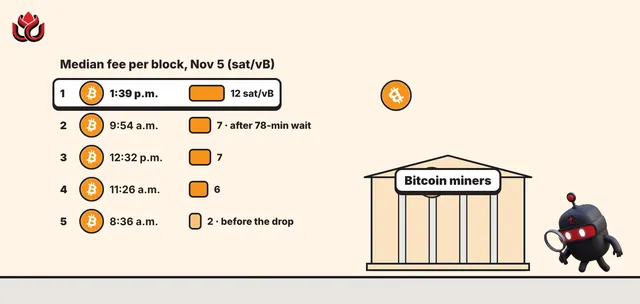
Bitcoin fell 5% in four hours. Fees peaked at just 12 sats after a 67-minute wait
mempool.space data shows the November 5 sell-off barely stressed the Bitcoin network. The biggest fee jumps came when blocks were slow, not when panic peaked.
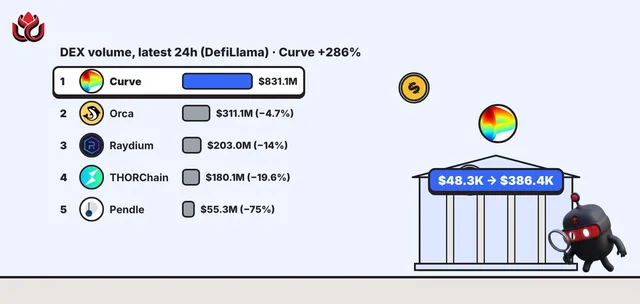
Curve's trading volume nearly quadrupled to $831 million as crypto sold off
DefiLlama shows the stablecoin swap venue went from $215 million to $831 million in a day, while total DEX volume rose less than 3% and several big DEXs slowed. Its fees jumped about eightfold.
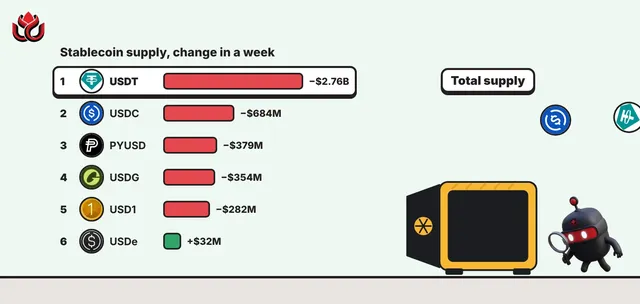
Stablecoin supply shrank $5 billion in six days. USDT fell the most
DefiLlama shows the total supply of dollar stablecoins fell every day from October 30 to November 5, the day bitcoin dropped below $76,000. Tether's USDT supply fell $2.76 billion in a week.
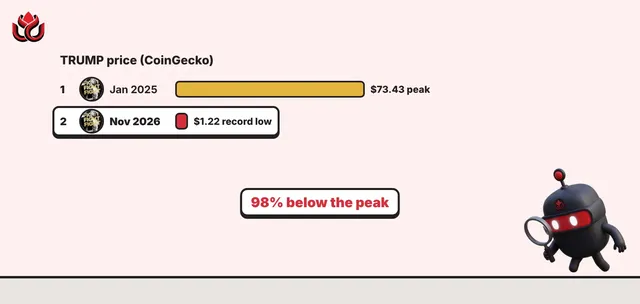
The TRUMP memecoin hit a record low of $1.22. It is now 98% below its January 2025 peak
The Solana token fell 12.6% in two hours on November 4 as trading volume more than quadrupled, CoinGecko's data shows. Its 24-hour volume is now larger than its whole market value.
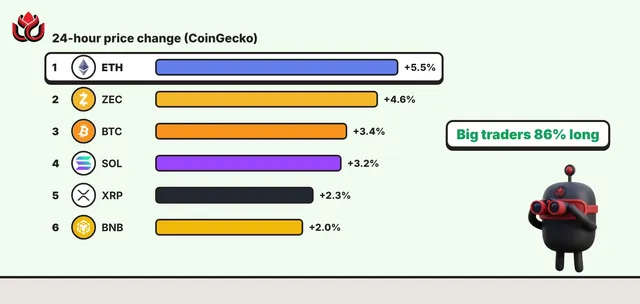
Ether jumped 4.6% in two hours and bitcoin is back above $80,000. Big traders are 86% long
Most of ether's 5.5% daily gain came between 9 and 11 a.m. ET on November 4, CoinGecko's data shows. DeepSea counts $3.35 billion in long bets against $543.87 million in shorts.
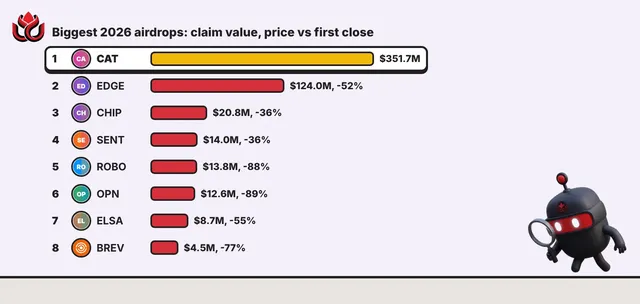
2026's biggest airdrops: $809 million claimed, 9 of 11 tokens below first close
On-chain data compiled by Bitquery puts 51 large EVM airdrops this year at $809.4 million and 2.02 million claiming wallets. Most claimers moved their tokens within a day, and CoinGecko prices show only Backpack and Espresso above their first daily close.
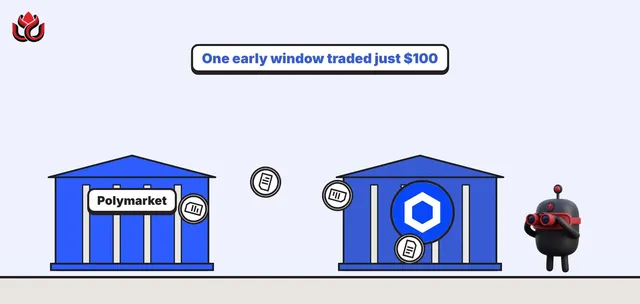
Polymarket adds 15-minute gold and silver bets. One early window traded just $100
Polymarket has added 15-minute and one-hour Up or Down markets on gold and silver, settled by Chainlink price streams. The format began with crypto, where Chainlink says it has passed $9 billion in volume, but the metal markets start almost empty.
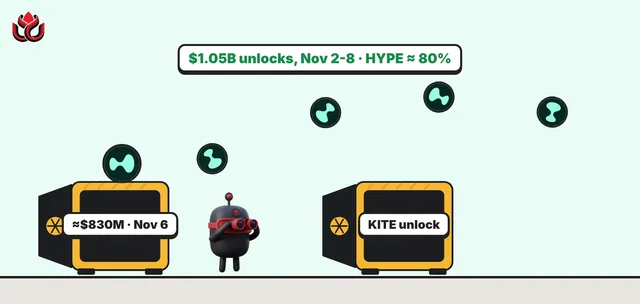
Token unlocks November 2 to 8: $1.05 billion due, led by HYPE, and Kite's float jumps 27%
Five scheduled unlocks this week add up to about $1.05 billion at November 2 prices, according to CoinGecko's calendars. Hyperliquid's HYPE is almost 80% of the dollar total, but Kite's KITE release is the biggest relative to what already trades.
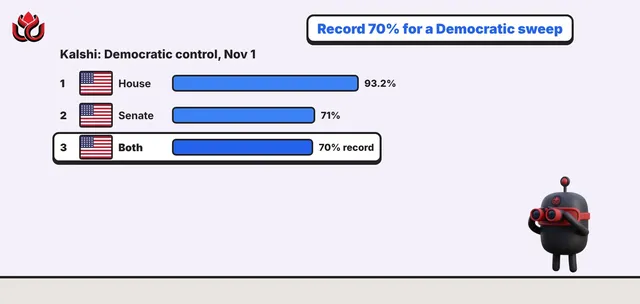
Kalshi prices a Democratic sweep at a record 70%. Did a fake pollster move the odds?
Two days before the November 3 vote, Kalshi's market priced Democrats winning both chambers at 70%, up more than 9 points in a month. Ten days earlier, Kalshi had to explain why a fabricated pollster barely moved its election markets.

What is DeepSea (desea.io)? The onchain app that labels wallets and tracks flows
DeepSea (desea.io) is a web app that labels crypto wallets and tracks what smart money, influencers, whales, exchanges and hackers do onchain. It is run by DeepTek Ltd, and its own terms say the data is information only, not financial advice.
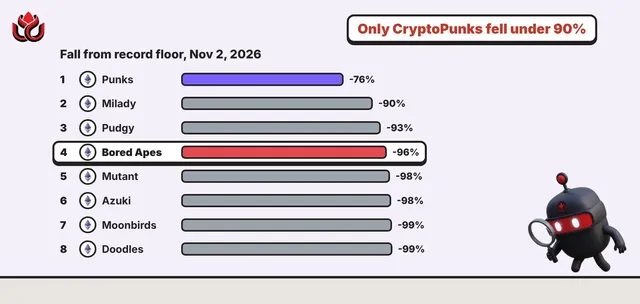
Bored Apes are down 96% from their record. Which NFT blue chip fell least?
Most of the famous NFT collections now sit about 90% to 99% below their peak floor prices in ETH, and the marketplaces are closing. CryptoPunks are the exception, at about 76% down.

Bitcoin mining and hashrate explained: difficulty, hashprice and data sources
Bitcoin miners race to find a block hash below a target, and every 2,016 blocks (about two weeks) the network resets the difficulty so blocks keep coming about every 10 minutes. Hashrate, the total guessing power, cannot be measured directly; it is estimated from difficulty and block times.

FDV vs market cap: how to read a token's supply, with HYPE's 4x gap as a guide
Market cap is price times the tokens circulating today. Fully diluted valuation (FDV) is price times the whole supply, including locked tokens. The gap between them shows how much supply is still to come.
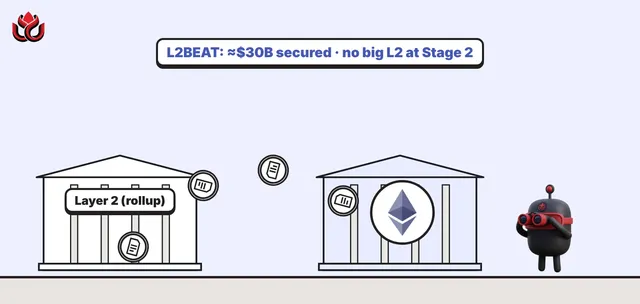
What is a layer 2? Rollups, proofs and why no big L2 is Stage 2 yet
A layer 2 is a separate blockchain that runs transactions cheaply and settles them on Ethereum, using fraud proofs or validity proofs to show its state is correct. L2BEAT tracks about $30 billion in L2s, and its Stages show how much control each team still holds.
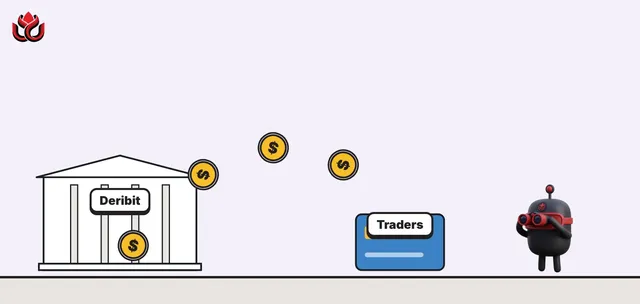
Crypto options expiry and max pain explained: what happens at 3 a.m. ET
Crypto options on Deribit, a major options exchange, expire at 3 a.m. ET (4 a.m. ET during daylight saving time) and settle in cash against a 30-minute average of an index price. Max pain is the strike price at which the most option value would expire worthless, a number traders watch but one that does not control the price.

Token unlocks explained: cliffs, vesting and why unlocked does not mean sold
A token unlock is when tokens locked at launch, usually for the team, investors or a treasury, become free to move. Unlocks add to circulating supply and dilute holders, but an unlocked token is not a sold one: Hyperliquid insiders claimed far less HYPE than they could.
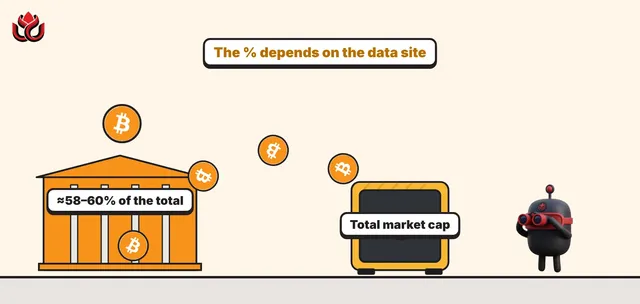
Bitcoin dominance and crypto market cap explained: why sites say 58% or 60%
Total crypto market cap adds up the market value of every tracked coin, and bitcoin dominance is bitcoin's share of it. As of November 2, 2026, the total was about $2.6 trillion to $2.7 trillion and bitcoin's share about 58% to 60%, depending on the data site.

Bitcoin halving explained: what it is, when the next one is and why it matters
The bitcoin halving is a rule in bitcoin's code that cuts the reward for mining a new block in half every 210,000 blocks, about every four years. The last one happened on April 20, 2024, at block 840,000. The next is due at block 1,050,000, expected around spring 2028.
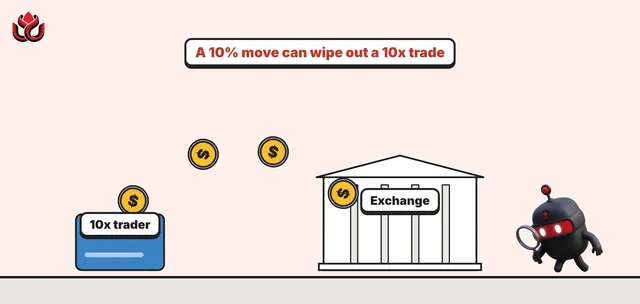
How crypto liquidations work: why a 10% move can wipe out a 10x trade
A liquidation is when an exchange force-closes a leveraged trade because losses have eaten through the trader's collateral. It protects the exchange and other traders from debts the trader cannot pay.

What is Solana? Alpenglow explained, from 12.8-second finality to a 150 ms goal
Alpenglow is Solana's new consensus protocol. Its first part, Votor, went live on mainnet on October 21, 2026, replacing TowerBFT and cutting the time for a transaction to become final from about 12.8 seconds to a target of about 150 milliseconds.
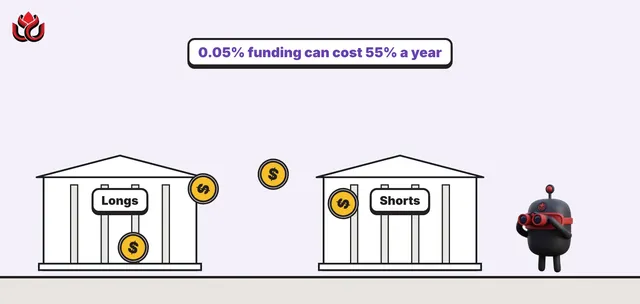
Perpetual futures funding rates explained: how 0.05% can cost 55% a year
A funding rate is a small payment that traders of perpetual futures make to each other to keep the contract's price close to the real market price. When it is positive, longs pay shorts. When it is negative, shorts pay longs.
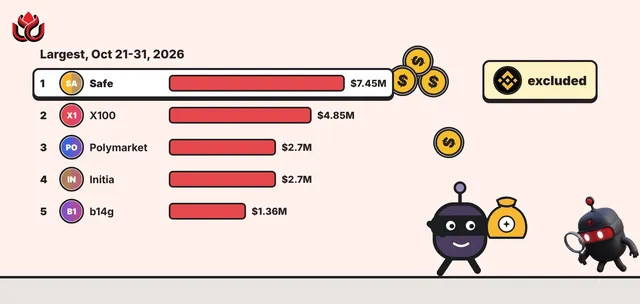
Beyond Binance: 19 more crypto hacks in October's last 11 days, about $24.6 million lost
Binance's $6.3 billion breach dominated October, but SlowMist logged 19 other attacks from October 21 to 31, close to two a day. They range from a $7.45 million multisig mistake to supply chain and DNS attacks.

Kalshi signed the NBA and S&P Dow Jones, then capped under-21 deposits at $2,500 a month
In five days, Kalshi became the NBA's preferred prediction market, agreed to build event-contract indexes with S&P Dow Jones Indices, launched sector data contracts and put a monthly deposit cap on its youngest traders. Then it raised $1 billion.
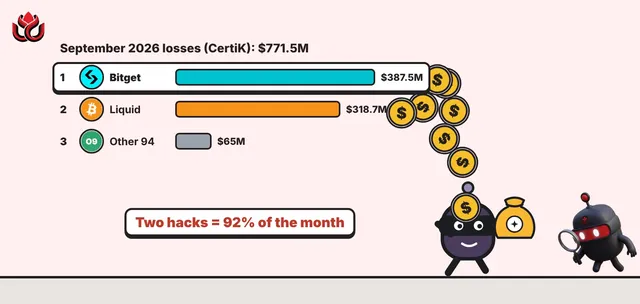
$771 million stolen in September, and two hacks were 92% of it
September 2026 was the worst month of the year for crypto hacks until October, CertiK's data show. Bitget and the Liquid Network caused almost all of it, and a returned bitcoin haul cut the real loss to about $488 million.