What is TON? Telegram's blockchain explained, and why Toncoin is now Gram
TON (The Open Network) is a proof-of-stake blockchain wired into Telegram, with a wallet built into the messenger. Its coin, long called Toncoin, now trades as Gram (GRAM), and that rename is the first thing a new user can trip over.
Key points
- TON began as the Telegram Open Network, was halted after a clash with the US SEC, and was relaunched as The Open Network, per CoinGecko.
- Its coin, Toncoin, is now listed as Gram (GRAM) on CoinGecko and ton.org. Ton.org says a non-custodial wallet from the Telegram team is built into the messenger.
- TON splits work across many chains: a masterchain coordinates, and shardchains split in two when traffic grows. Ton.org lists fixed fees of about 0.00039 Gram per transfer.
 What DeepSea's data shows
DeepSea still lists the coin under its old name. On November 2 its live net-flow ticker on the Pulse page showed TONCOIN with a net inflow of $21.2 million, one of the largest on the strip.
On DeepSea's long/short page, a perpetual contract listed as GRAM showed $7.07 million of longs against $37,100 of shorts among tracked wallets.
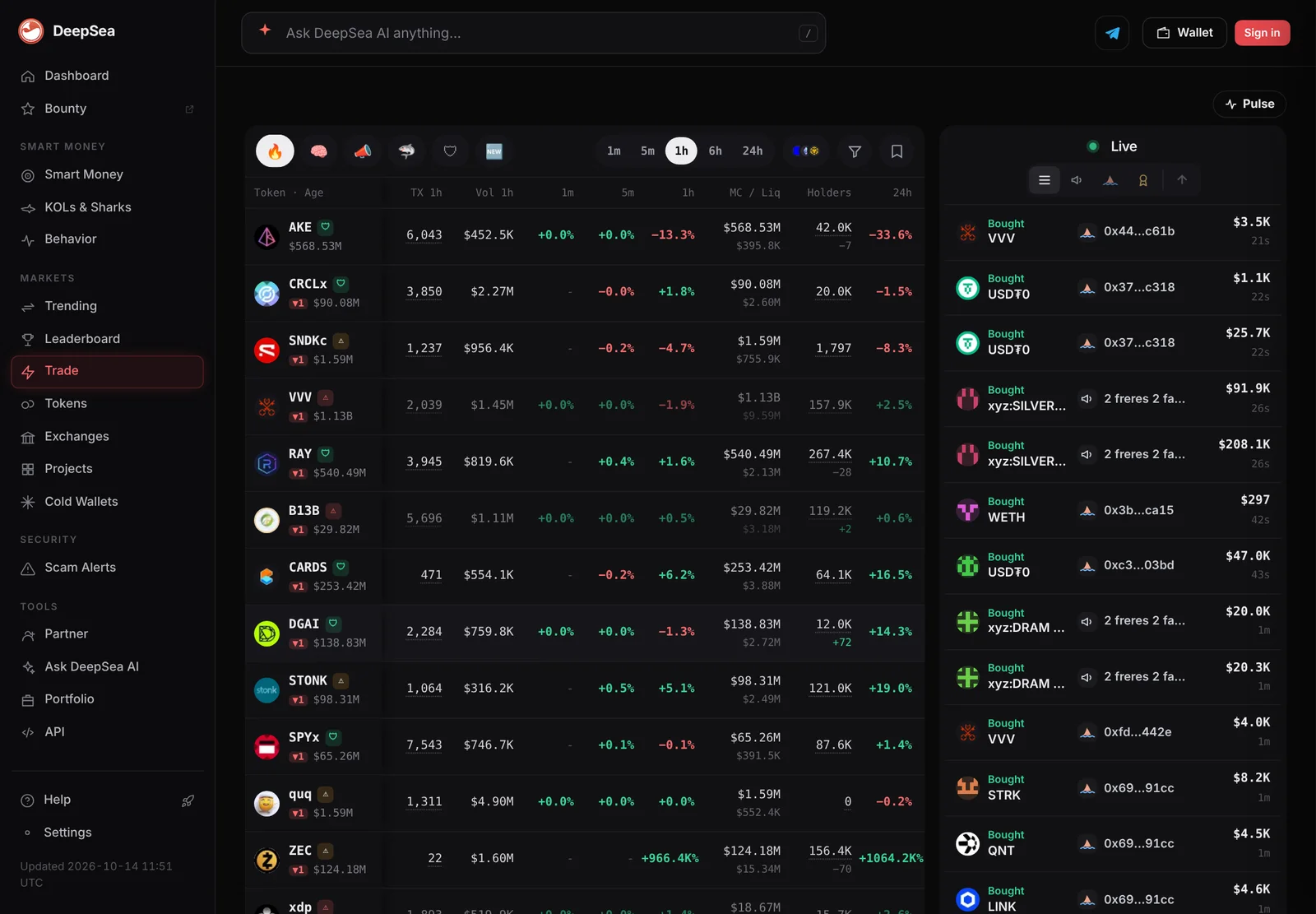
Data: DeepSea (desea.io), checked November 2, 2026, 1:00 p.m. ET.
What is TON?
TON, short for The Open Network, is a layer-1 blockchain: it runs its own network rather than settling on another chain. Its official site calls it a "Decentralized L1 Blockchain developed by Telegram and the open-source community." Users pay fees, send money and run apps on it, often from inside Telegram.
As of November 2, 2026, the ton.org homepage showed 377 validators, 808 nodes, 3.6 million monthly active wallets and 4.8 million transactions in 24 hours. It gives a block time of about 0.4 seconds and finality, the point after which a transaction cannot be reversed, of about 0.6 seconds. Those are the project's own figures, and the page gives no time stamp for them.
How is TON connected to Telegram?
The history matters here. According to CoinGecko's TON explainer, Telegram co-founder Nikolai Durov wrote the original design for the Telegram Open Network, and his brother Pavel Durov was its public face. A test network ran in 2019, but the planned launch was stopped after what CoinGecko calls "regulatory friction" with the US Securities and Exchange Commission. CoinGecko says the project repaid investors and Telegram stepped back.
Telegram itself drew a line early. In a January 6, 2020, notice, it said that once TON launched, "Telegram will occupy the same position as any other party," and that its wallet would not be built into the messenger at launch.
Developers then relaunched the network as The Open Network, with the TON Foundation leading later work, per CoinGecko. The two have since moved closer again. CoinGecko says Telegram announced TON Space, a self-custody wallet inside the app, on September 13, 2023. Today ton.org says "the non-custodial Gram Wallet from the Telegram team" is built into the messenger, and lists Telegram usernames, collectible numbers, Stars, Premium, giveaways, ad payouts and gifts that can become TON-based NFTs.
What is Gram (formerly Toncoin)?
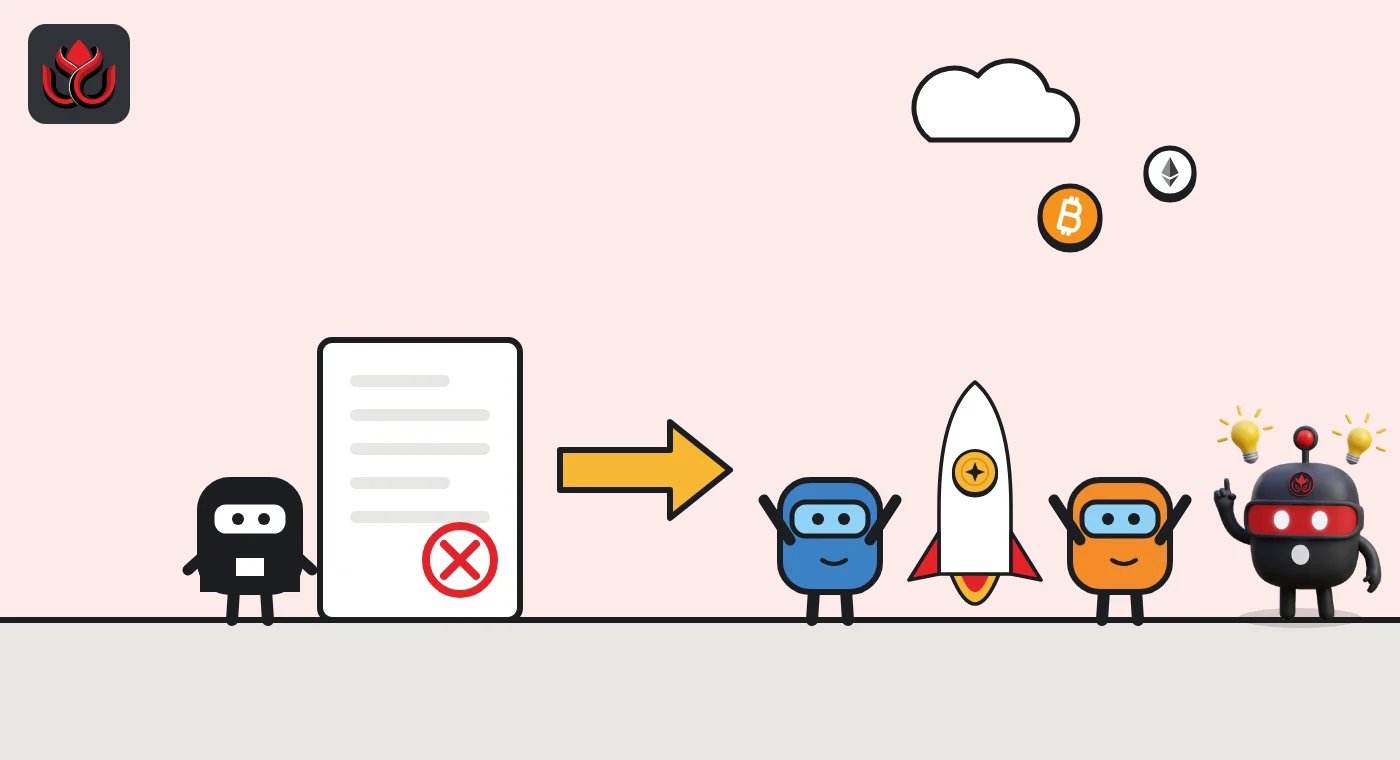
The native coin was called Toncoin, ticker TON. CoinGecko now lists it as "Gram (prev. Toncoin)", ticker GRAM, and says Toncoin has rebranded to Gram. The ton.org homepage says Gram is the native coin and "was also known as Toncoin." Neither page gives the reason for the change. The name echoes the Grams of the original Telegram project.
Gram pays for transactions, storage and messages on the network, and validators stake it. CoinGecko's explainer also lists voting on network proposals and paying for services such as TON DNS (names for wallets and sites). Ton.org says the coin was first handed out through proof-of-work mining.
As of November 2, 2026, CoinGecko showed GRAM at about $1.19, down 2.8% in 24 hours, with a market value of about $3.39 billion, ranked 31st. It counted about 2.85 billion GRAM in circulation out of a total supply of about 5.28 billion, with no maximum. The price was about 86% below its CoinGecko all-time high of $8.25, by our arithmetic.
How does TON work?
TON is built as many blockchains working together. The TON docs describe the pieces:
- The masterchain holds the network's global settings and system contracts, including the ones that manage validators.
- Workchains are separate chains with their own rules. Most accounts and apps live on the basechain, workchain 0. The sharding docs say there can be up to 2^32 workchains.
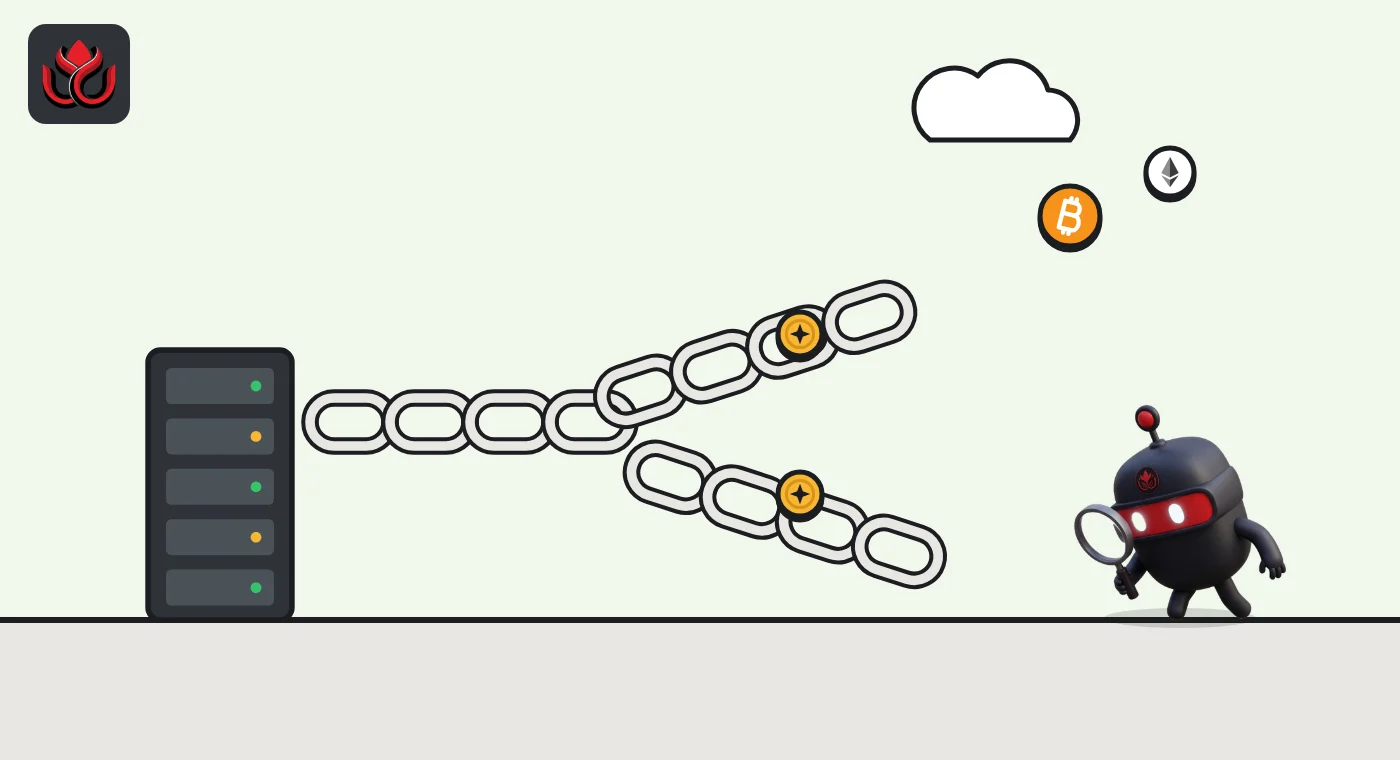
- Shardchains are slices of a workchain. When traffic passes a threshold, a shard splits in two; when it falls, two shards merge. The number of shards in a workchain can range from 1 to 2^60.
The docs call this approach infinite sharding. The aim is that busy periods add parallel lanes rather than queues.
Contracts on TON talk to each other through messages that can be processed in different blocks, rather than in one all-or-nothing step. The docs say this caps how complex any single step can be, but it means a multi-step action can partly succeed. Even a wallet is a smart contract: it checks your signature and turns your request into messages. Developers write contracts mainly in Tolk, with FunC as an older option, and the network converts gas into Gram to charge fees.
How much does a TON transaction cost?
Ton.org says a Gram transfer costs about 0.00039 Gram and a USDt transfer about 0.001 Gram, and that "all fees are fixed and do not depend on network load." At CoinGecko's $1.19 price on November 2, 2026, that is well under a cent for either, by our arithmetic.
Tokens on TON are called Jettons, the TON version of a standard token. Tether's USDt is one of them: ton.org lists about 1.4 billion USDt on TON. Pump.fun, the memecoin app, added TON tokens to its app on October 27, as LC Insight reported here.
Typical TON transfer fees, per ton.org
Gram per transfer
Project's own figures. Source: ton.org, checked November 2, 2026
Who secures TON?
Validators. They lock up coins as a stake and take turns approving blocks, and CoinGecko's explainer says the chance of being picked rises with the amount staked. CoinGecko describes TON's consensus as a Byzantine fault-tolerant form of proof of stake, built to keep running even if about a third of validators drop out. The TON docs say validators are run by parties with "a large stake in TON" and that finality usually takes under a second. Ton.org listed 377 validators on November 2, 2026.
What are the risks?
- Close ties to Telegram. Much of TON's reach comes from the messenger. Telegram's own 2020 notice said it would hold no special role, yet today its team ships the built-in wallet. Changes in Telegram's plans would weigh on TON.
- A name change in progress. Wallets, exchanges and price sites may show Toncoin, TON or GRAM for the same coin. Check the official contract and network before moving funds.
- Messages that partly fail. Because contracts talk through separate messages, a complex action can stop halfway. App design has to handle that.
- Self-reported stats. The validator, wallet and speed figures come from ton.org. Explorers such as Tonscan help check them.
- Price swings. GRAM traded about 86% below its all-time high on November 2, 2026.
LC Insight analysis
This section is our reading of the facts above, not a statement of fact.
- We think TON's strongest asset is distribution, not technology. A wallet inside a messenger with a huge user base is a shortcut few chains have, and it is also TON's biggest single dependence.
- The Toncoin to Gram rename is a real risk for newcomers. Until every wallet and exchange shows the same name, buying the wrong token or sending on the wrong network gets easier.
- Sharding is TON's long-term bet. Splitting chains lets capacity grow, but asynchronous messages make apps harder to build safely, and that is where bugs tend to hide.
What's next
- How wallets and exchanges finish the Toncoin to Gram rename.
- USDt supply on TON as listed on ton.org and explorers.
- Changes to the Telegram wallet and to features tied to TON.
Frequently asked questions
Is Toncoin the same as Gram?
Yes. CoinGecko lists the coin as Gram (prev. Toncoin) with the ticker GRAM, and ton.org says Gram is TON's native coin and was also known as Toncoin.
Does Telegram own TON?
Not formally. Telegram stepped back after the SEC dispute, and the network was relaunched as The Open Network with the TON Foundation leading later work, per CoinGecko. Ton.org now says the wallet built into Telegram comes from the Telegram team.
Is the wallet in Telegram custodial?
Ton.org describes the built-in Gram Wallet as non-custodial, meaning the user holds the keys. CoinGecko says Telegram announced TON Space, a self-custody wallet, on September 13, 2023.
How fast is TON?
Ton.org gives a block time of about 0.4 seconds and finality of about 0.6 seconds.
Disclaimer. This article is based on public information and the sources listed below as of the update time shown. It is for information only and is not investment, legal or tax advice. Figures may change as companies and authorities publish new data.